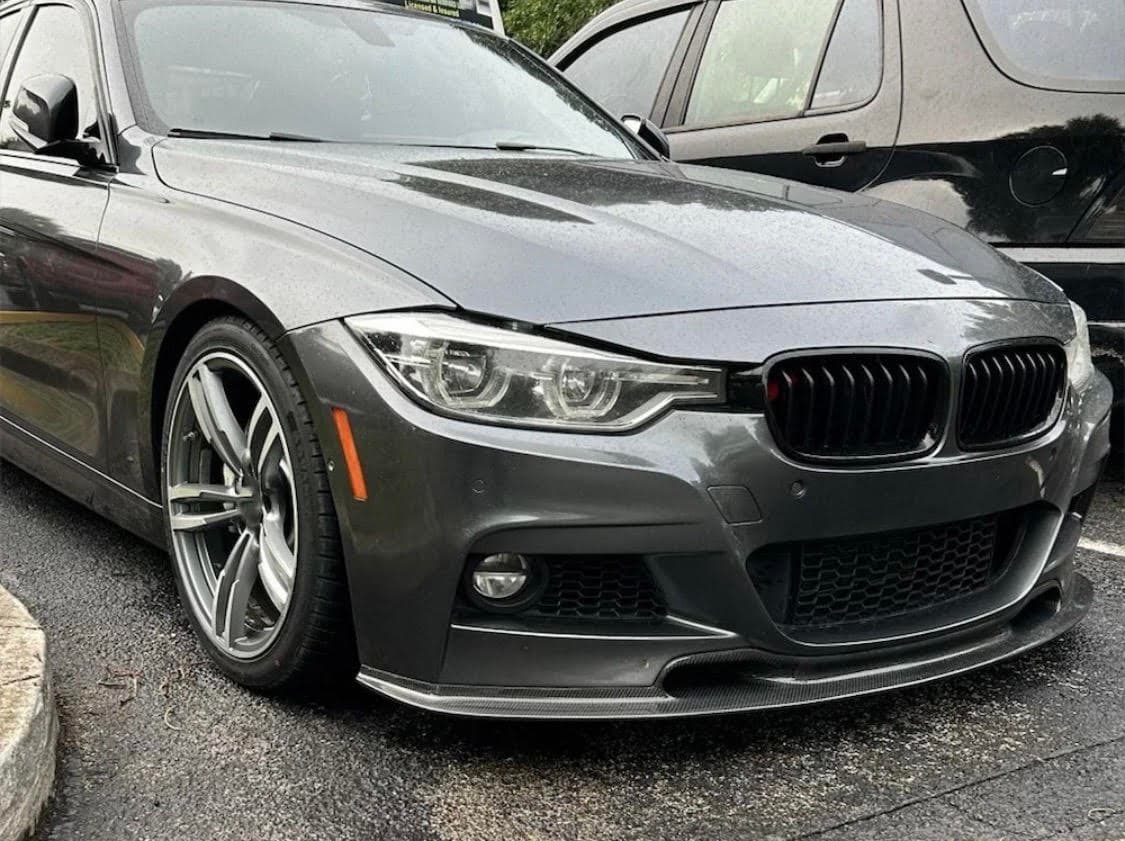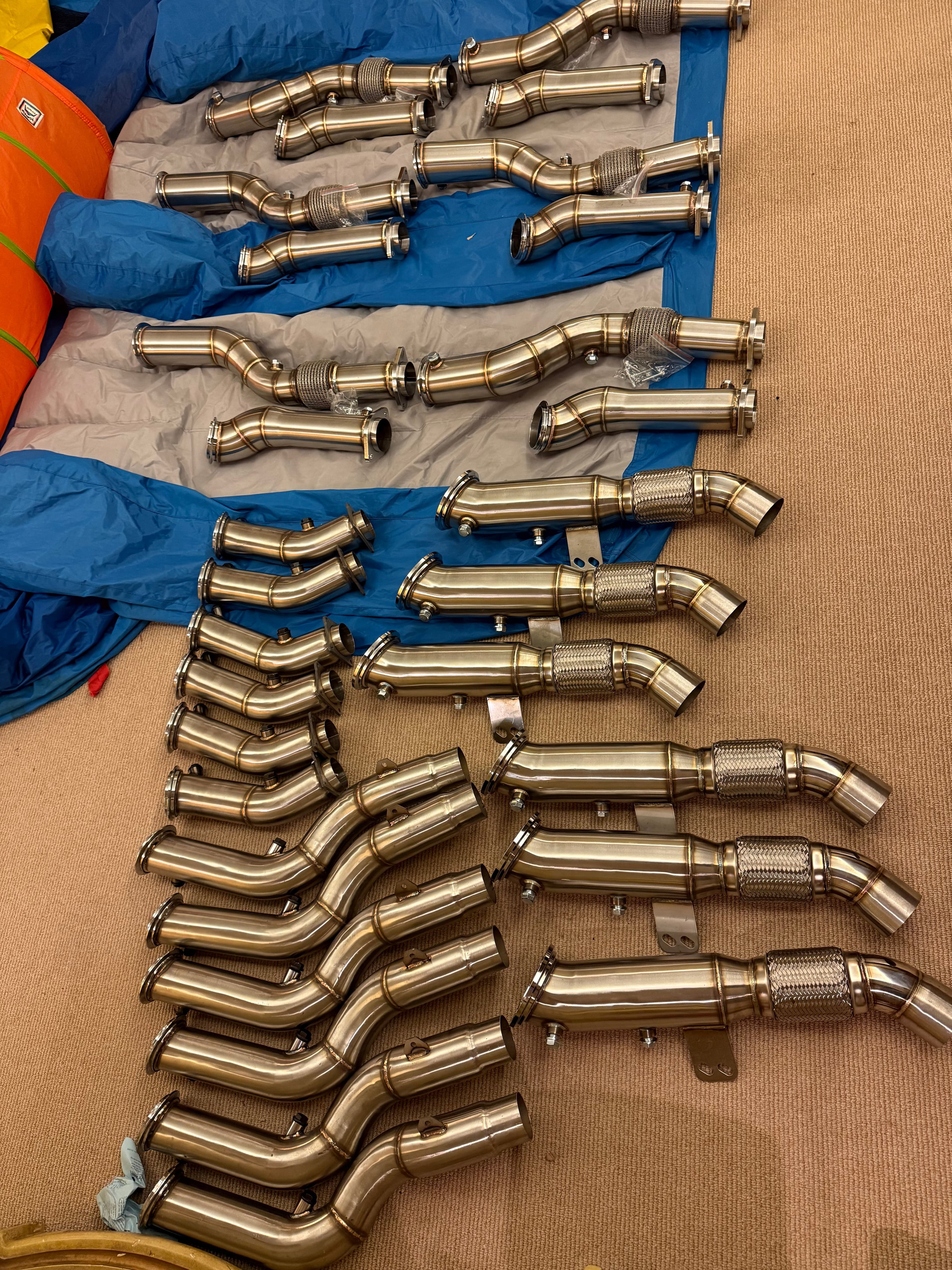
A downpipe is the first section of exhaust after the turbo, and on the B58, S55 and S58 the factory one carries the catalytic converter. An aftermarket downpipe swaps it for a free-flowing stainless pipe, and on its own that mostly changes the sound. The gains come with a tune, which you need anyway to keep fuelling and fault monitoring in line, and ordering the right part comes down to the engine: B58 Gen 1, B58 Gen 2, S55 or S58.
What a downpipe does on a turbo BMW
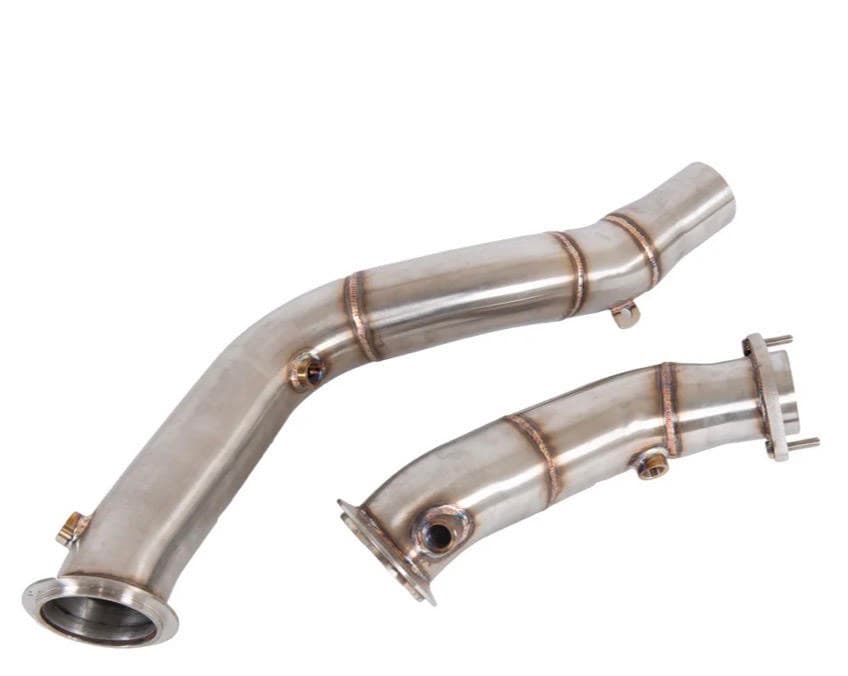
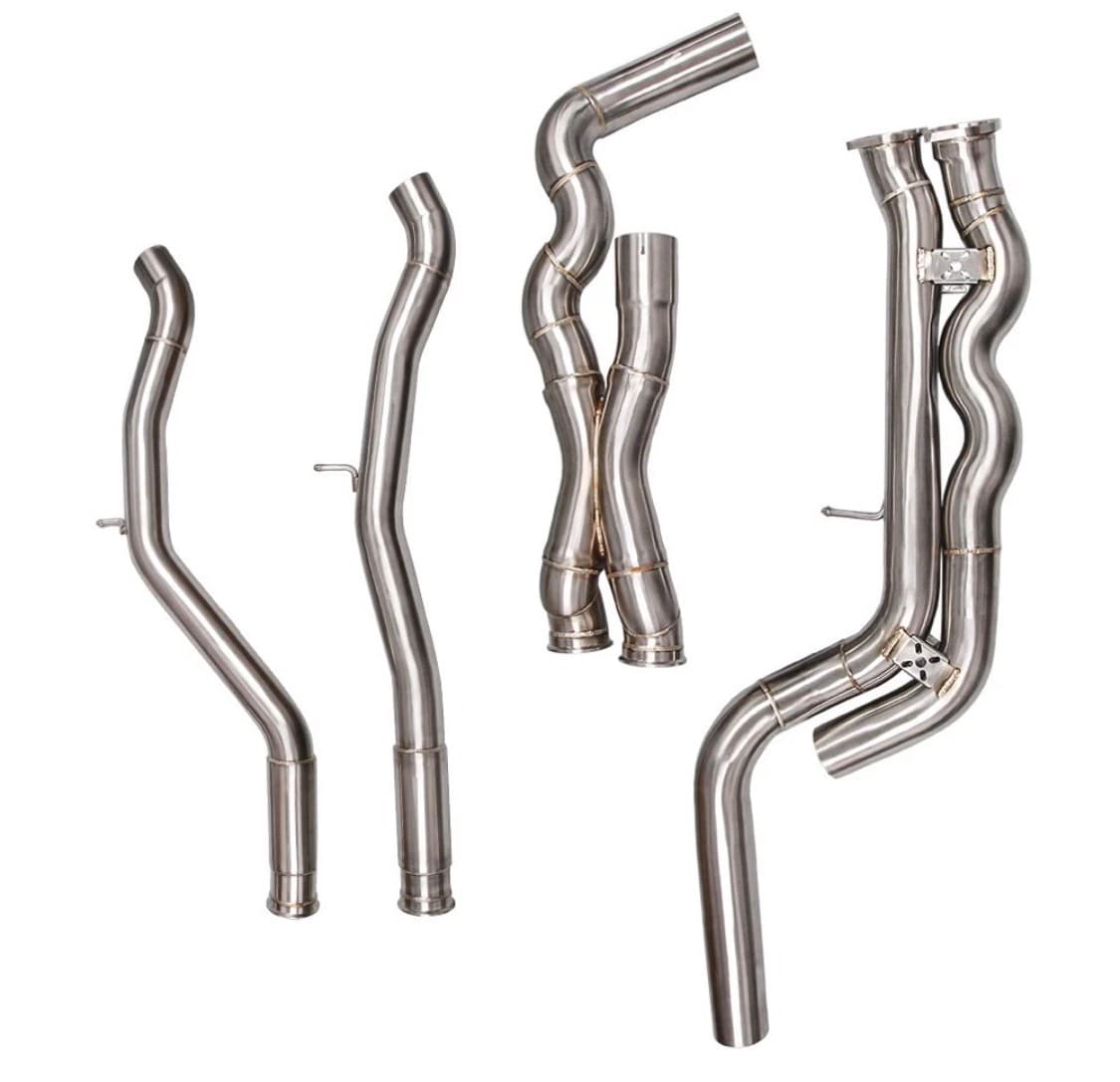
Exhaust gas spins the turbine in the turbo, leaves the turbine housing and enters the downpipe, which carries it down and back to the midpipe. The B58 has one turbo and one downpipe. The S55 and S58 are twin-turbo, so each turbo has its own downpipe and they come as a pair.
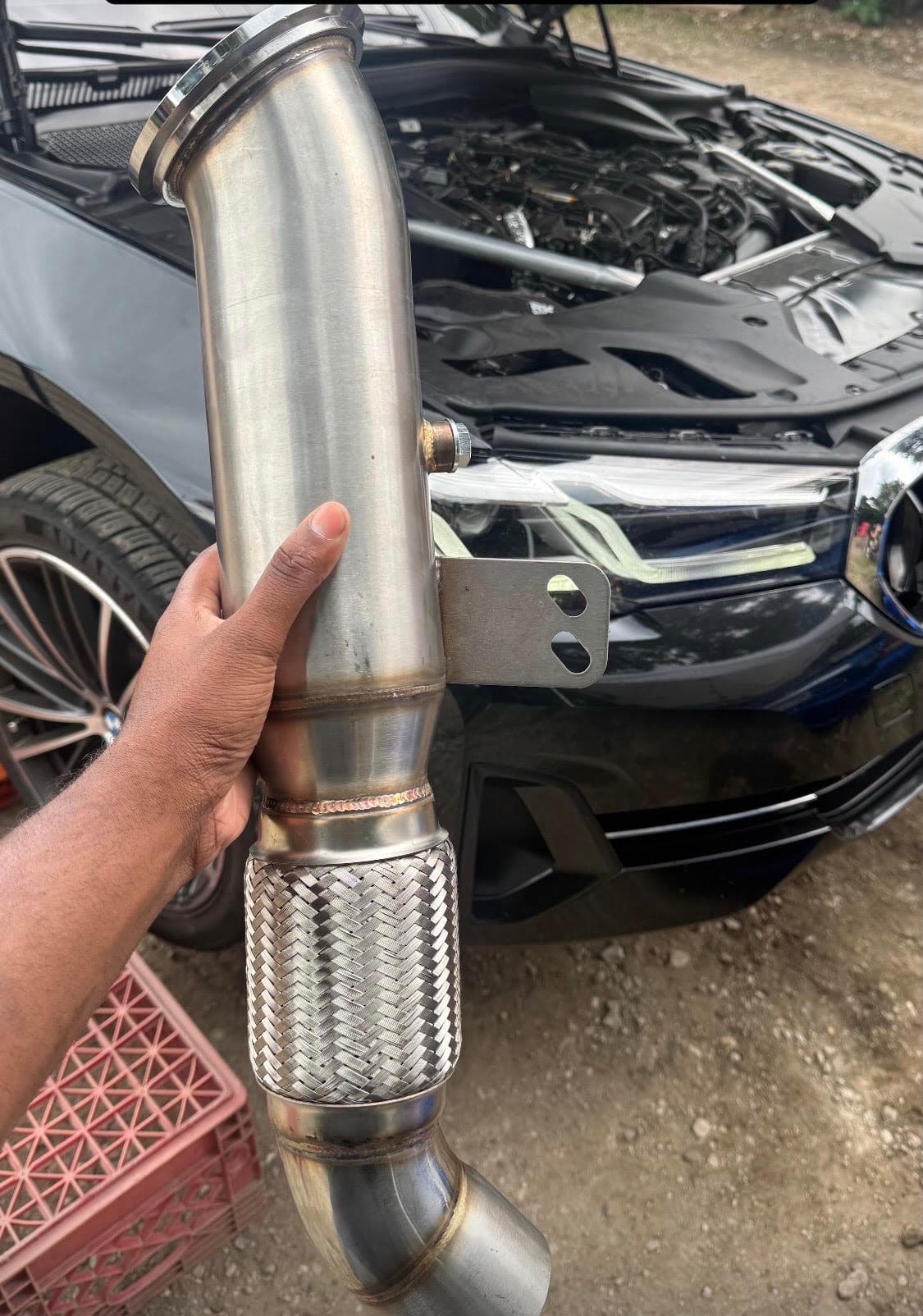
BMW puts the catalytic converter in the downpipe, right behind the turbo, because a catalyst works best hot. The catalyst is a dense honeycomb, and pushing gas through it costs flow. Replace that section with an open stainless pipe and the turbine has less to push against, so the turbo comes up to boost more easily and the car gets noticeably louder.
What it does not do by itself is add much power. The engine computer (the DME) keeps its factory boost targets, so you get a different noise and little else until the car is tuned.
Catless vs catted downpipes
A catted downpipe keeps a catalyst, normally a less restrictive one than factory, in a pipe that flows better than the original. A catless downpipe has no catalyst at all.
| Catted downpipe | Catless downpipe | |
|---|---|---|
| Catalyst | Yes, usually a high-flow type | None |
| Sound | Louder than factory | Louder still, rawer on cold starts |
| O2 sensor faults without a tune | Possible | Expected |
| Emissions inspection | Depends on local rules | Will not pass where the catalyst is checked |
The M177 downpipes are catless by name, the S55 bolt-on kit lists catless downpipes, and the S55/B58/S58 listing is designed for off-road use. None of our BMW downpipe listings mention a catalyst, so if you need one, ask before ordering.
Do you need a tune for a downpipe?
Yes, for three reasons, and the check engine light is only the most visible one.
O2 sensors. These engines run one sensor before the catalyst and one after it. The front sensor measures the exhaust so the DME can correct fuelling. The rear sensor watches the catalyst: a working cat stores and releases oxygen, so the rear signal stays much steadier than the front. Take the catalyst away and the rear sensor sees almost the same thing as the front one, so the DME decides the cat has failed and sets a catalyst efficiency fault. A tune written for a downpipe normally switches off that rear-sensor check.
Fuel trims. Trims are the corrections the DME layers on top of its base fuelling, driven by the front sensor. A downpipe changes how freely the engine breathes and how quickly boost builds, so the trims work harder to cover the gap. A tune moves the base maps to suit the hardware instead.
Boost control. The wastegate is controlled against a model of the factory exhaust. With less restriction after the turbine, boost can arrive faster than the DME expects, which can end in boost deviation faults, a drivetrain malfunction warning or reduced power.
Which engine is in your car: B58 Gen 1, Gen 2, S55 or S58
The S55 is the twin-turbo six in the F80 M3, the F82 and F83 M4, and the F87 M2 Competition and M2 CS. The original F87 M2 uses the N55 and is not covered by S55 parts.
The S58 replaced it in the G80 M3, G81 M3 Touring, G82 and G83 M4, G87 M2, F97 X3 M and F98 X4 M. Our option is listed as G8X S58, so it is for the G80-family M3 and M4; for the G87 M2, X3 M or X4 M, ask us before ordering.
The B58 is the single-turbo six in the non-M cars, in two generations:
- Gen 1 (B58B30M0): the F30 340i, F32, F33 and F36 440i, F20 M140i, F22 M240i, early X3 M40i and early 540i and 740i.
- Gen 2 (B58TU): the G20 M340i, G22 M440i, G42 M240i, G29 Z4 M40i, Toyota Supra, X5 and X7 xDrive40i, 840i and later builds of the Gen 1 cars.
The changeover happened around the 2019 model year but model by model, so the year alone is not proof. A VIN decoder that returns the engine code settles it: B58B30M0 is Gen 1, while B58B30M1, B58B30O1 and B58B30C are Gen 2. Or lift the engine cover and count the bolts at the throttle body flange: three on Gen 1, two on Gen 2. The charge pipe post covers both checks in more detail. Downpipes are listed by generation for the same reason charge pipes are: a part for one engine is not interchangeable with the other.
Choosing between our S55, B58 and S58 downpipes
The table uses what each listing states.
| Listing | Options | What the listing describes | Price |
|---|---|---|---|
| S55/B58/S58 Downpipes | B58 Gen 1, B58 Gen 2, G8X S58, S55 | One listing for all four engines, designed for off-road use | $245 |
| B58 Downpipe | Gen 1, Gen 2 | Stainless steel, flex section, O2 sensor bung | $230 |
| S55 Downpipes | None (F80 M3, F82 M4, F87 M2) | Stainless steel pair with O2 sensor bungs | $259 |
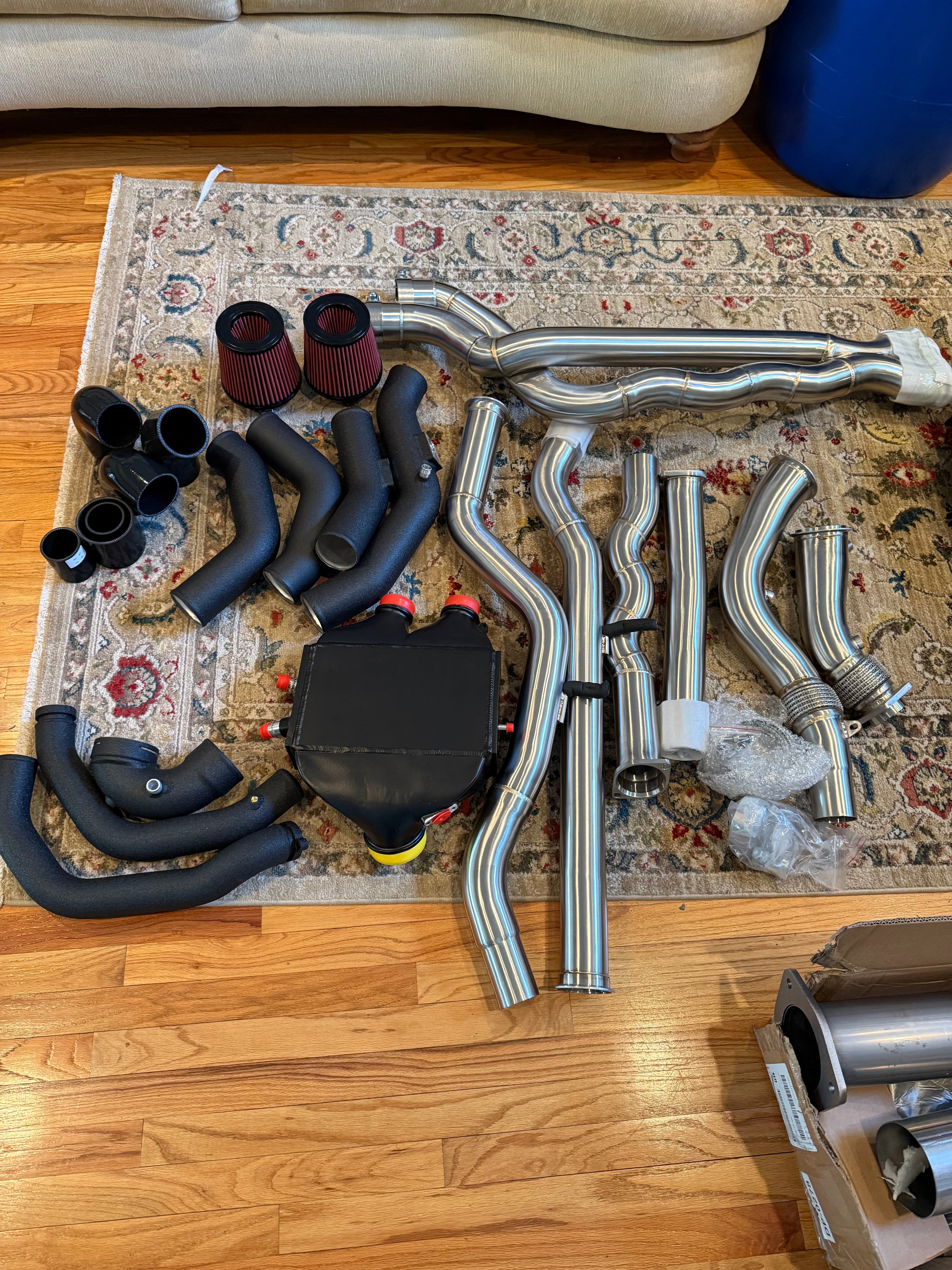
| JCX S55 Bolt-On Kit | F87 M2, F8X M3/M4 | Catless downpipes, equal length midpipe, charge pipes with J-pipe, front mount intakes, charge cooler | $2,500 |
| JCX M177 Catless Downpipes | None (email to confirm fitment) | Made to order for M177 Mercedes models | $650 |
S58. The S55/B58/S58 downpipes are the listing to order from: pick the G8X S58 option for the G80 or G82.
B58. You have two listings. The dedicated B58 downpipe is stainless with a flex section, a braided joint that lets the exhaust move with the engine without cracking a weld, and an O2 sensor bung. The multi-engine listing also carries B58 Gen 1 and Gen 2 options. Either way, choose the generation first.
S55. The S55 downpipes are a stainless pair with O2 sensor bungs, and the multi-engine listing has an S55 option too. If the downpipes are the start of a full bolt-on build, the S55 bolt-on kit puts everything in the table row above in one order.
Mercedes M177. We also make catless downpipes for the M177 V8. The listing names the C63, C63 S, GLC63, GLC63 S and CLS63. They are made to order, so email us to confirm fitment for your car and year first. The tune and legal points above apply to them too.
The full range, including midpipes, is under Exhaust, and the midpipe guide covers equal length, single and Z-pipe options.
What to fit at the same time
Fit related hardware in the same visit so the tuner sees the finished car.
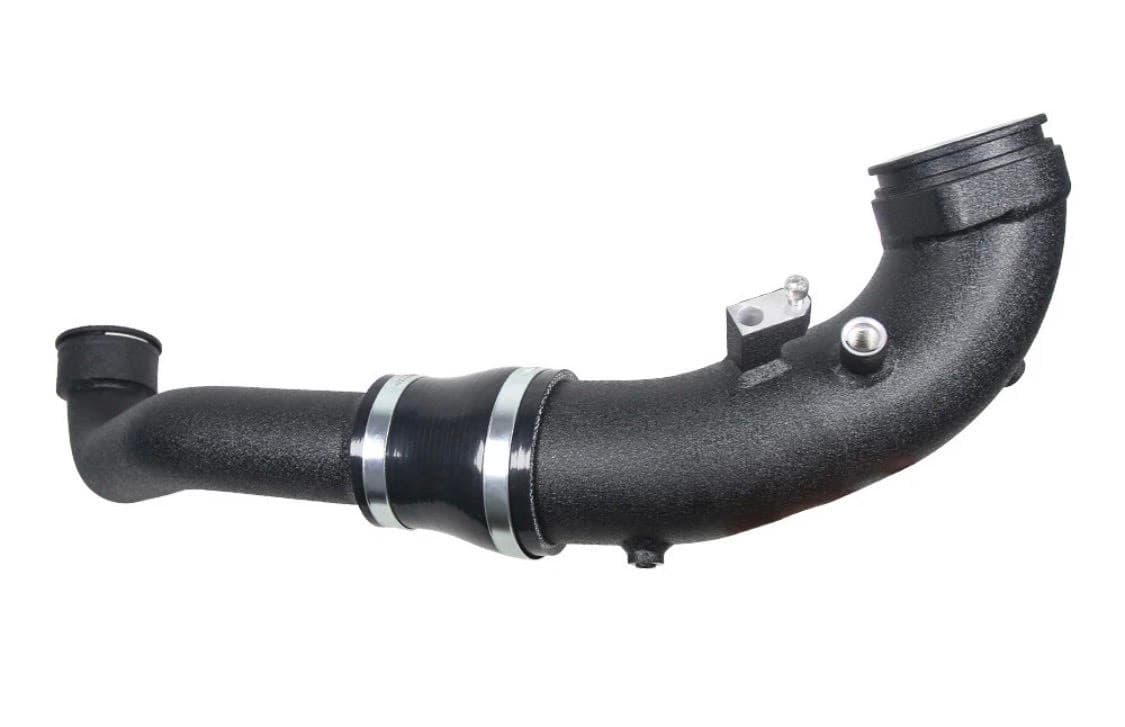
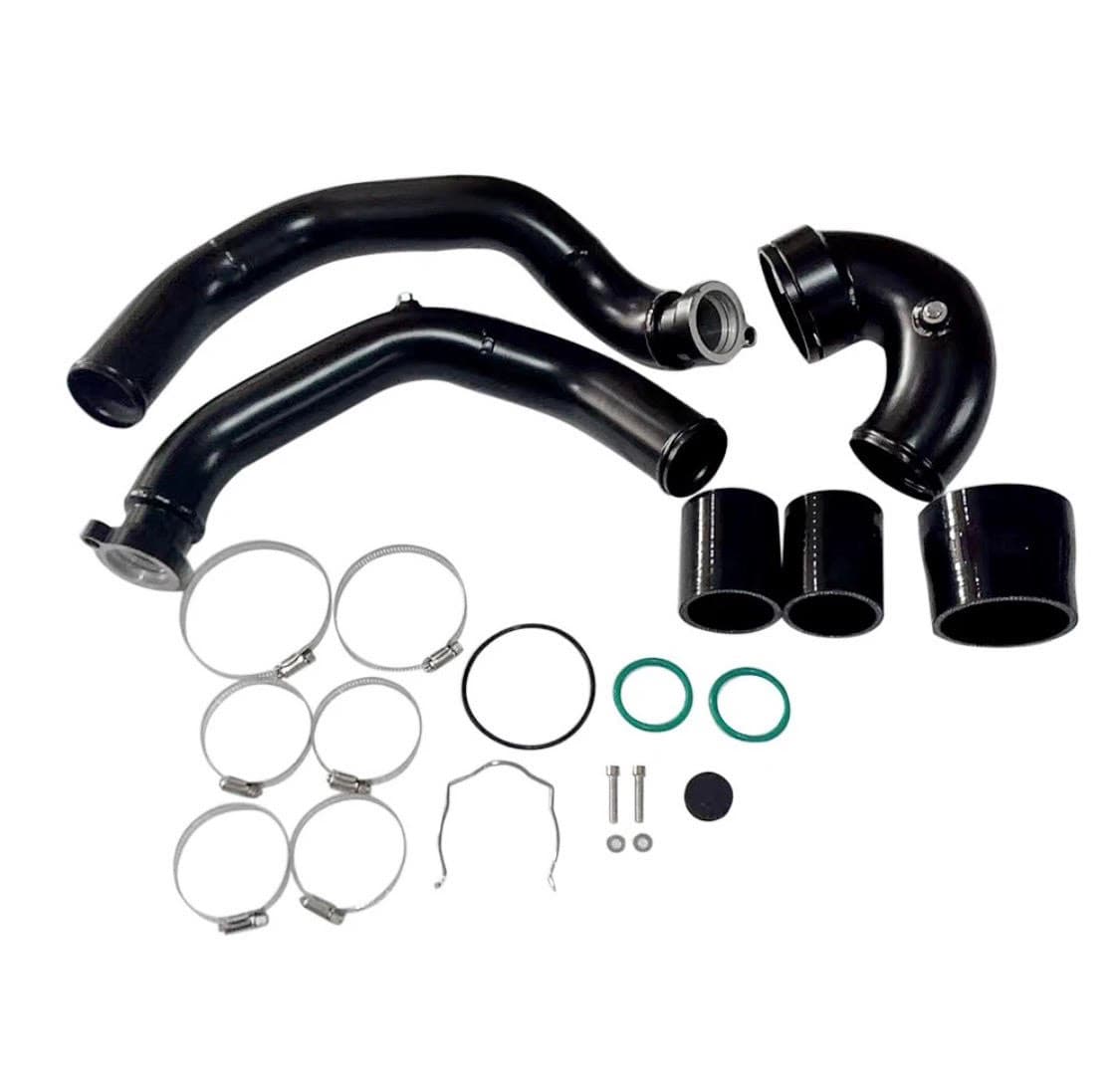
The charge pipe comes first. On both the B58 and the S55 the factory part is plastic, and the first thing a higher boost target finds is a tired charge pipe. The B58 charge pipe is $190 and listed by generation like the downpipe. On the S55, the charge pipes and J-pipe kit replaces all three plastic pipes for $380.
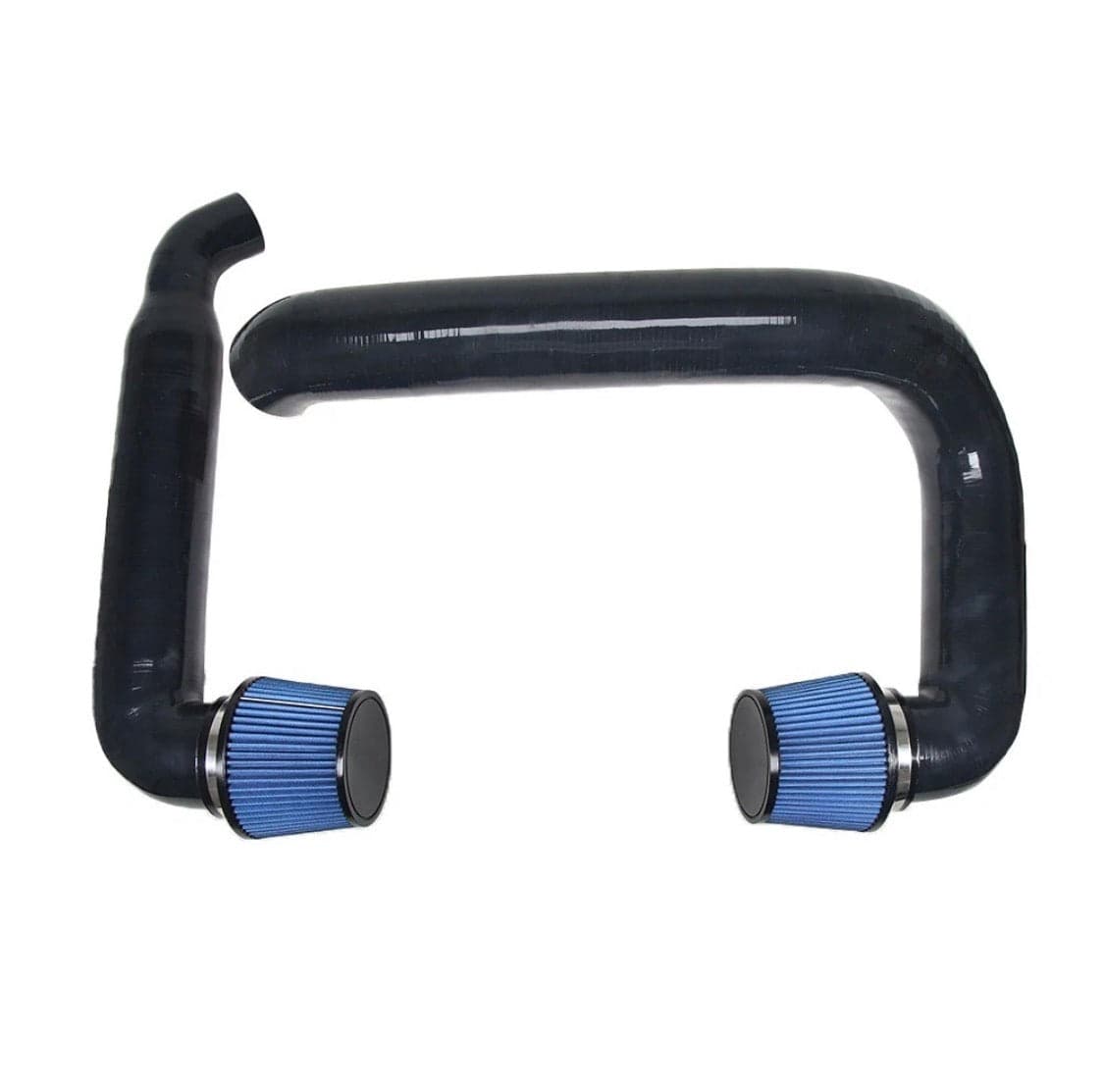
Intakes sit on the other side of the turbo. The JCX front mount intakes are $315, with options for the F97 and F98 X3 M and X4 M, the G8X M3 and M4, G2X and G30 B58 cars, and aluminium intakes for the S55. Dedicated G8X intake kits are under Intake & Charge.
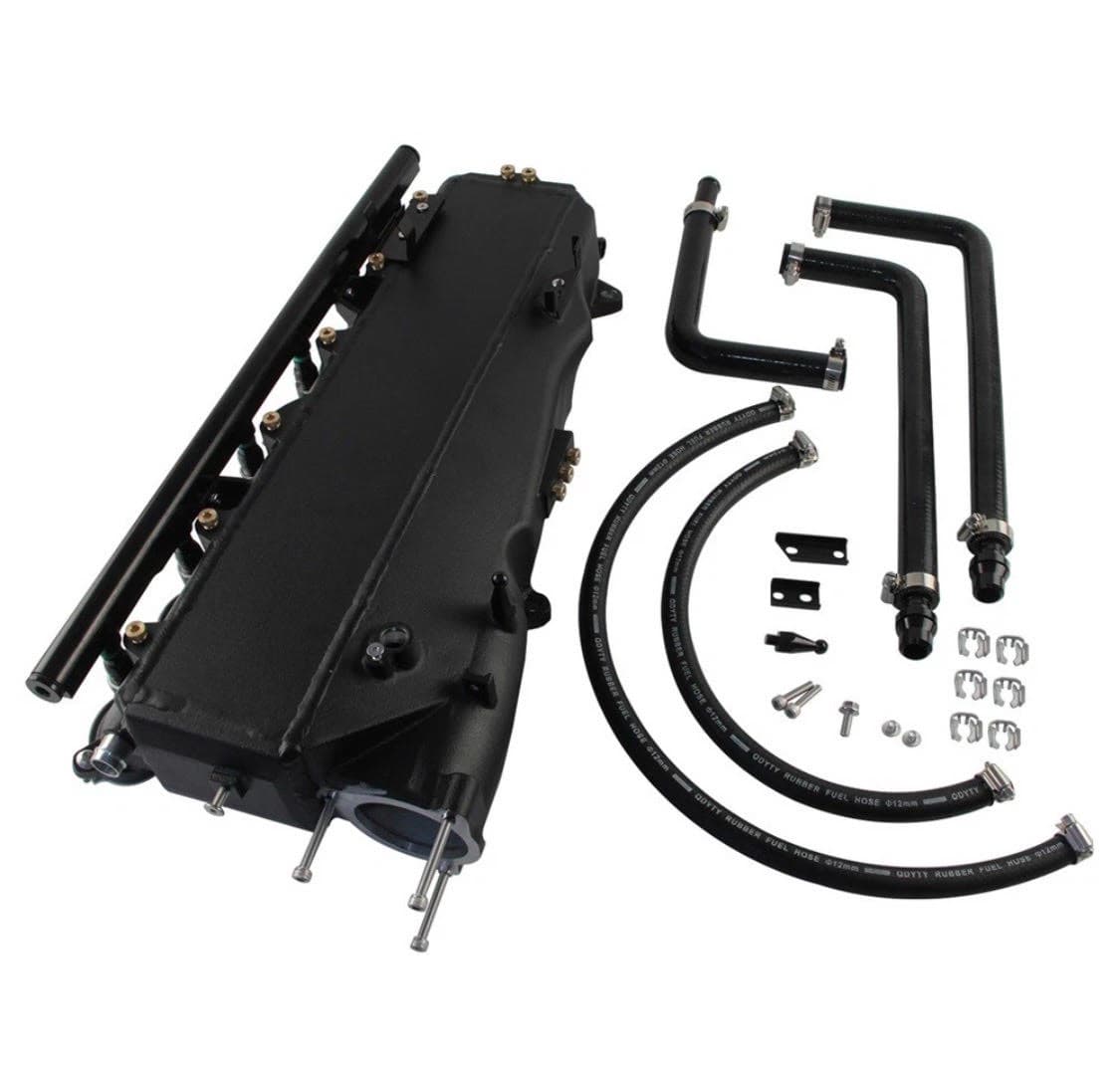
On the B58 the charge air cooler is built into the intake manifold, so the manifold sits in the same air path the tune is written around. The B58 CNC intake manifold is $1,150, with fitting hardware, and is also sold as Gen 1 or Gen 2.
If your car turns out to have the N55, none of these downpipes fit it, but tuned N55s are hard on ignition parts. The N55-B58 coil conversion kit is $290 with all hardware and brackets, listed under Engine.
Installing a downpipe: an overview
The exact order varies between chassis, and xDrive cars and the twin-turbo engines have more in the way. You need the car safely on stands or a lift, metric sockets with extensions, Torx bits, an O2 sensor socket, penetrating oil and high-temperature anti-seize.
- Work on a cold car, and soak the downpipe fasteners in penetrating oil the night before.
- Remove the underbody panels and any braces or heat shields over the downpipe.
- Unplug the O2 sensor connectors and free the wiring from its clips before anything moves.
- Separate the downpipe from the midpipe, then release it at the turbo outlet and lower it out. On the S55 and S58 you do this twice.
- Move the O2 sensors across, with anti-seize on the threads only and none near the sensor tip.
- Fit new gaskets at every joint. A reused, crushed gasket is the usual source of a ticking leak.
- Hang the new pipe loosely, line it up, then tighten from the turbo backwards. Check clearance to the driveshaft, subframe, lines and sensor wiring.
- Flash the tune, start the car and listen at idle for ticking or puffing at the joints.
Scan for codes, and recheck the fasteners after a few heat cycles.
FAQ
Do I need a tune for a downpipe?
Yes. Without one you get a catalyst fault and check engine light, fuel trims working harder and boost control still running on factory assumptions. Flash the tune as part of the install.
Will a catless downpipe cause a check engine light?
On factory software, yes. With no catalyst, the rear O2 sensor reads almost the same as the front one and the DME logs a catalyst fault. A tune written for a downpipe normally disables that check.
Are B58 Gen 1 and Gen 2 downpipes the same?
No. They are separate options and not interchangeable. Check the engine code (B58B30M0 is Gen 1) or count the throttle body flange bolts, three on Gen 1 and two on Gen 2.
Will S55 downpipes fit a standard F87 M2?
No. The original F87 M2 uses the N55. S55 downpipes fit the M2 Competition and M2 CS, along with the F80 M3 and F82 M4.
Does a downpipe add power without a tune?
Very little. It changes the sound and lets the turbo build boost more easily, but the DME keeps its factory boost targets. The gains come from a tune written for the new hardware.