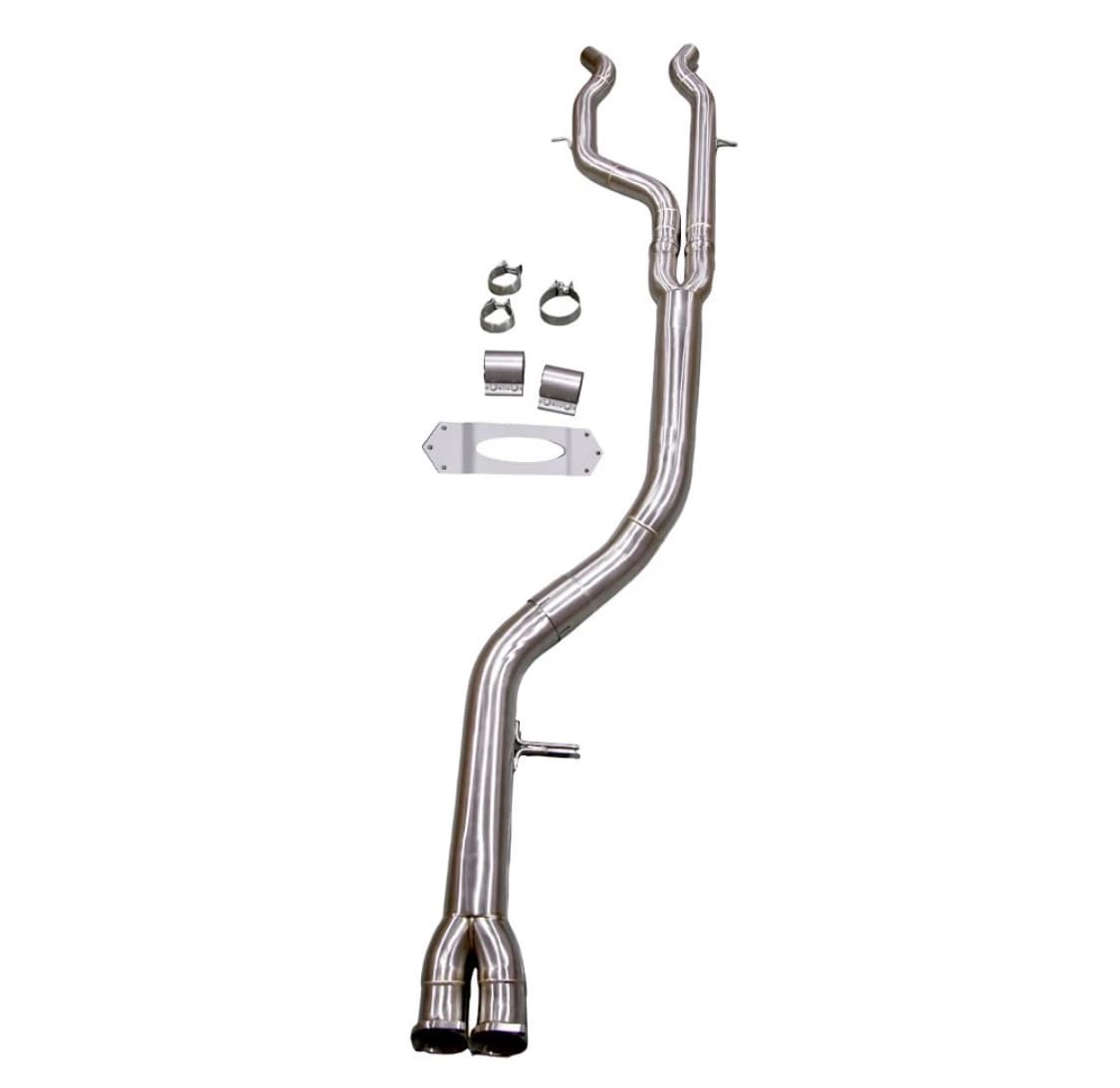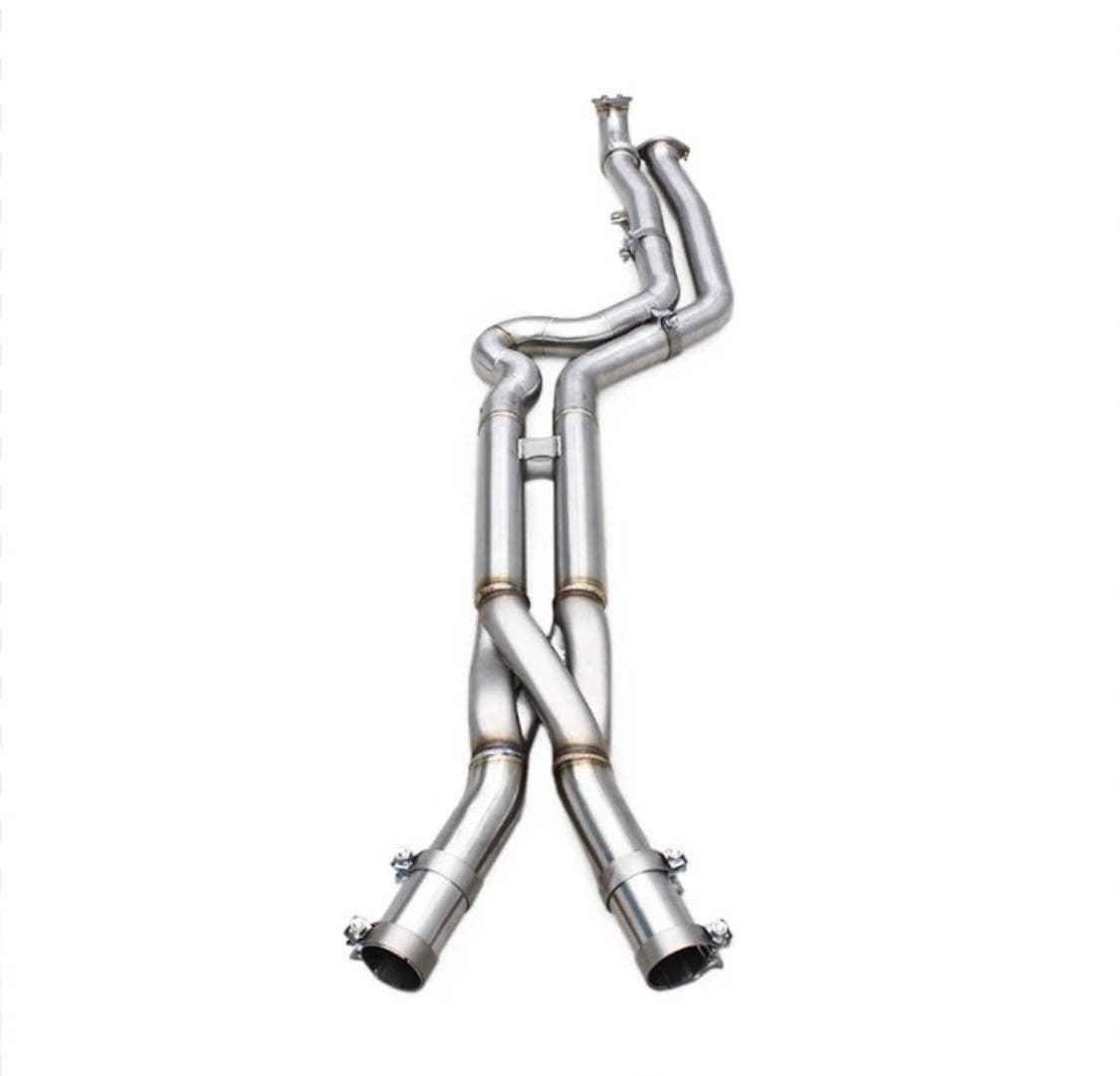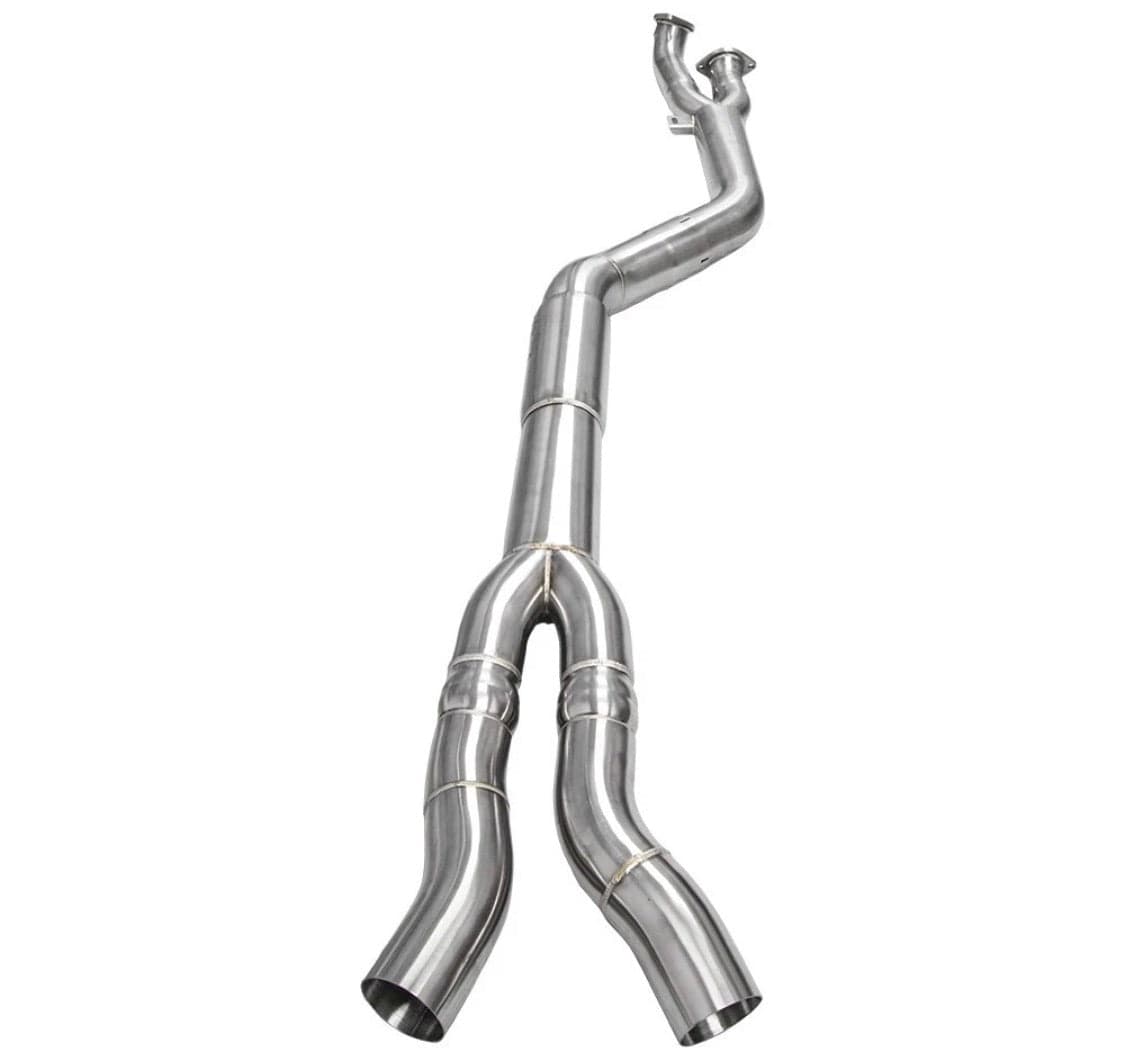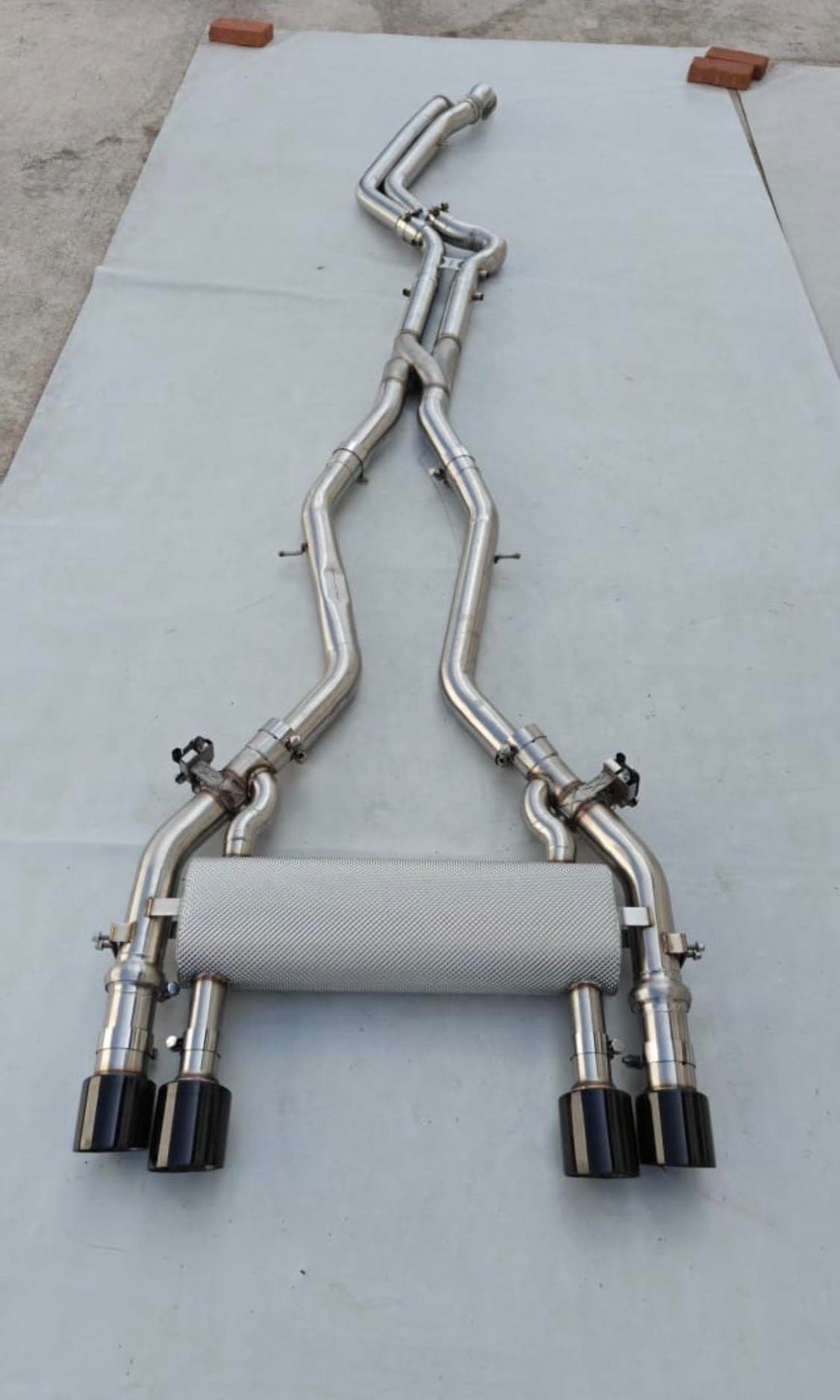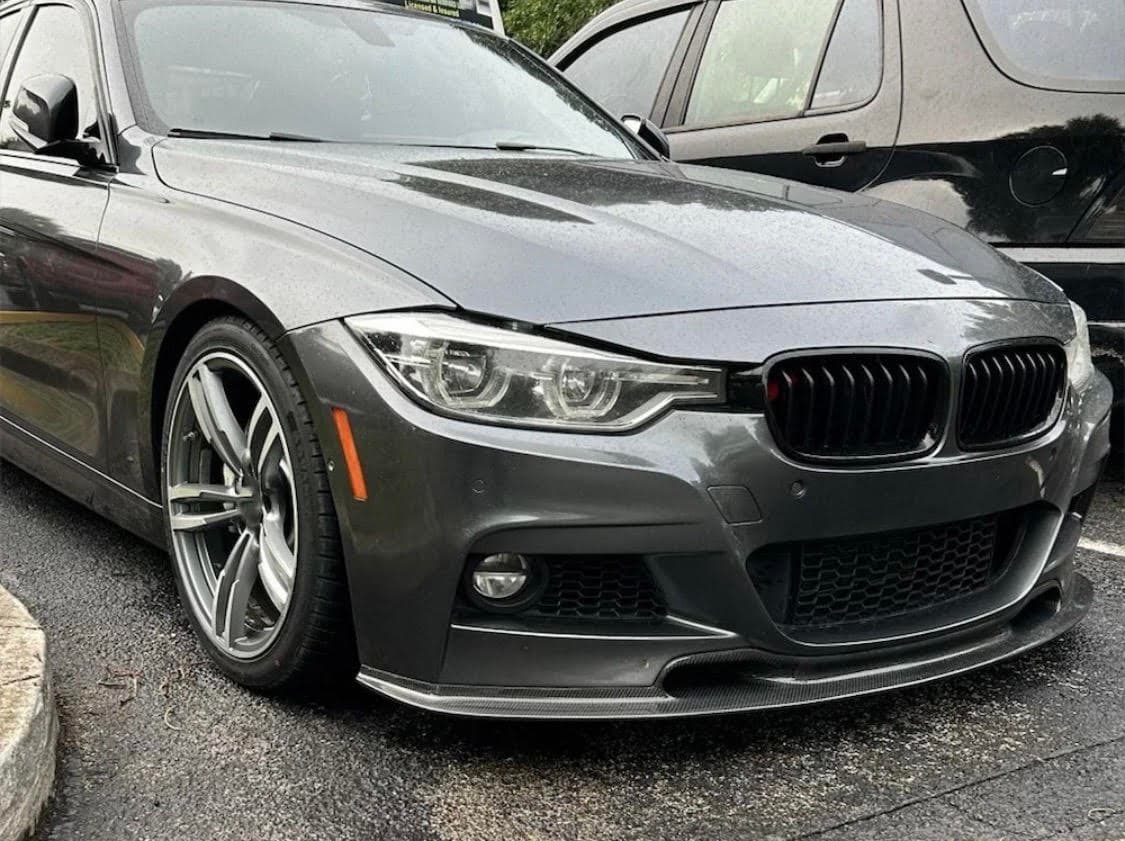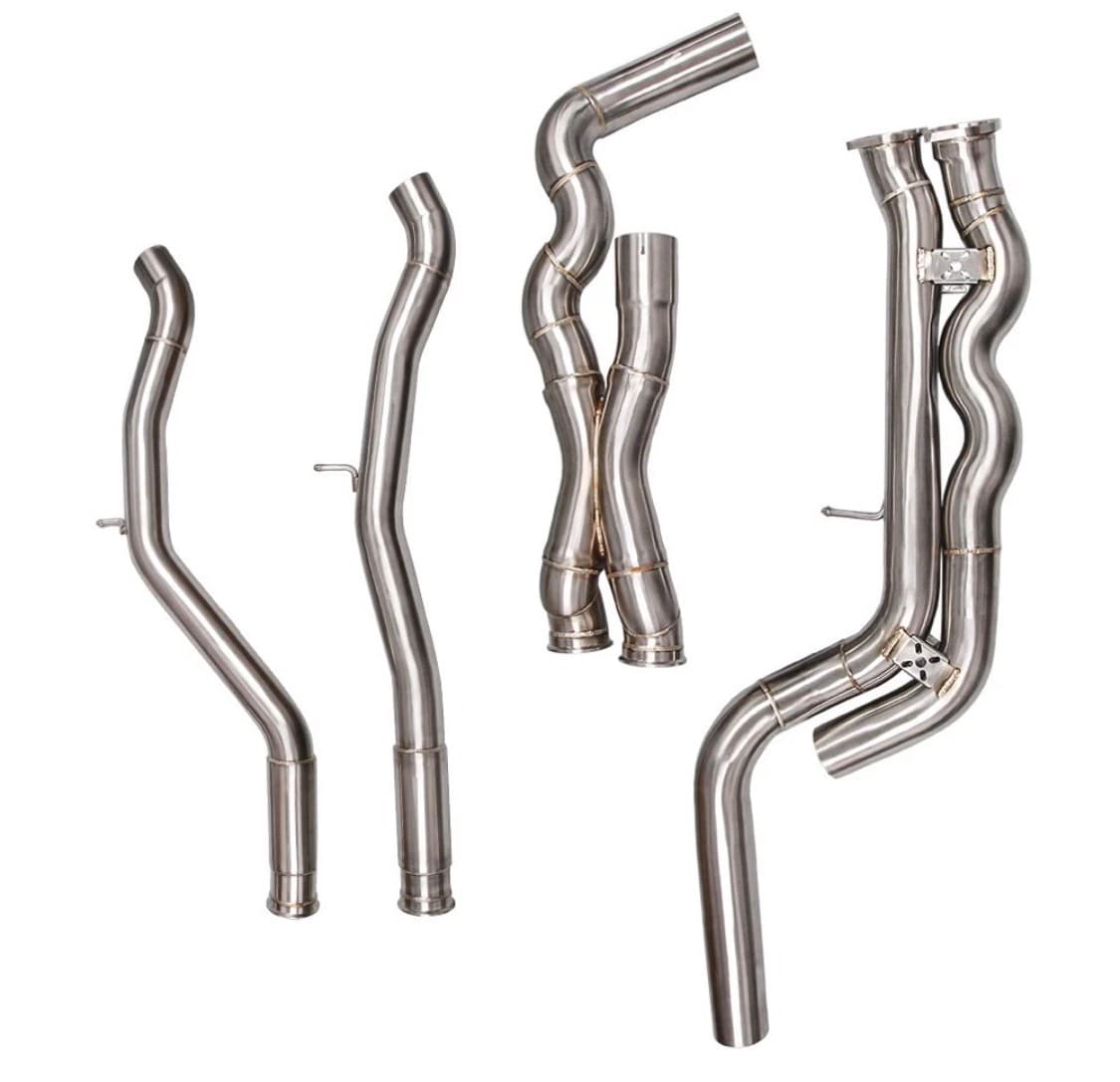
A midpipe replaces the resonated middle section of the factory exhaust, between the downpipes and the rear muffler, and changes the character of the sound more than any other single exhaust part. On the S55 F80 and F82 the choice is equal length, which usually comes across smoother, or single, which usually comes across deeper and louder. On the S58 G80, G82 and G87 you choose between a midpipe on its own and a full system with a muffler and tips, and the M2 and M3/M4 versions are different parts.
What a midpipe is and what it replaces
Follow the exhaust back from the engine on an F80 or a G80. The downpipes bolt to the turbos and carry the catalytic converters. Behind them runs a long section under the centre of the car, usually with one or more resonators in it, and that section feeds the rear muffler and the tips. That middle section is what the aftermarket calls the midpipe.
Resonators are tuned chambers that cancel particular frequencies. BMW uses them to take out harsh notes and to keep the cabin quiet at highway speed. Remove them and the exhaust gets louder and its tone shifts. That is the trade every midpipe makes, and the design of the replacement decides which way the tone goes.
The G8X Z-pipe midpipe listing puts it plainly: it replaces the factory resonated section. The rear muffler, its valves and the tips stay as they are, so the sound changes while the back of the car looks the same.
Equal length vs single midpipe on the S55 F80 and F82
The S55 is a twin-turbo straight six with three cylinders feeding each turbo, so the exhaust starts as two streams, one per downpipe. The two F8X midpipes handle those streams differently.
An equal length midpipe keeps the two streams apart in two pipes of the same length, all the way back to the muffler. Matched paths deliver the pulses from each bank evenly, which is why the result is usually described as smoother, with more volume than stock but less of an edge. The F8X equal length midpipe is $740, and its listing describes a deeper, smoother and more aggressive tone and says it helps reduce unwanted S55 rasp.
A single midpipe merges the two streams into one large pipe for most of the run. The F8X single midpipe is $640, and its listing describes a large single-pipe design with a deeper, more aggressive tone and stronger sound through the rev range, and also says it helps reduce the S55 rasp. Single midpipes generally sound bigger and lower than equal length ones, and on most cars they are the louder of the two.
Rasp is the thin, metallic edge the S55 can have at higher revs, a common complaint once the exhaust flows more freely. Both F8X midpipes are listed as helping with it, but how much remains depends on the downpipes, rear section and tips too.
| Equal length midpipe | Single midpipe | |
|---|---|---|
| Layout | Two separate pipes of matching length | One large pipe for most of the run |
| Tone, generally | Smoother, more even, refined | Deeper, bigger, more aggressive |
| Volume, generally | Louder than stock | Louder than stock, usually the louder of the two |
| Drone at cruise | Possible | Possible, often more noticeable |
| Listed for | F80 M3, F82 and F83 M4 | F80 M3, F82 and F83 M4 |
| Price | $740 | $640 |
Drone: what it is and how to live with it
Drone is a low, steady boom in the cabin at a constant rpm, usually somewhere in the range you cruise at on the highway. The resonators were there to cancel it, so any midpipe that removes them makes drone more likely, though not certain.
How much you notice depends on the revs you cruise at, since drone sits in a narrow band, on the rest of the system, since a free-flowing rear section adds to it, and on you. Some owners never notice a hum that drives others to swap parts back.
If you do long highway runs, pick the smoother option or keep some resonance in the system. The S55 bolt-on kit offers its equal length midpipe with a resonated option. On the G8X, a valved rear section lets you close the valves on the highway and open them when you want the noise.
G80, G82 and G87 midpipe options
The S58 cars have their own range, and every G8X listing asks you to select M2 (G87) or M3 / M4 (G80 / G82). The two are different parts.
The G8X midpipe is a 4-inch midpipe at $620. The listing describes the install as cutting the factory pipe at designated spots and bolting on with the hardware and bracket in the box, with no welding. It keeps the factory rear muffler and valves.
The Z-pipe midpipe is $1,220 and replaces the factory resonated section. Z-pipe is the name the aftermarket uses for this layout, so check the routing in the product photos rather than reading too much into the letter.
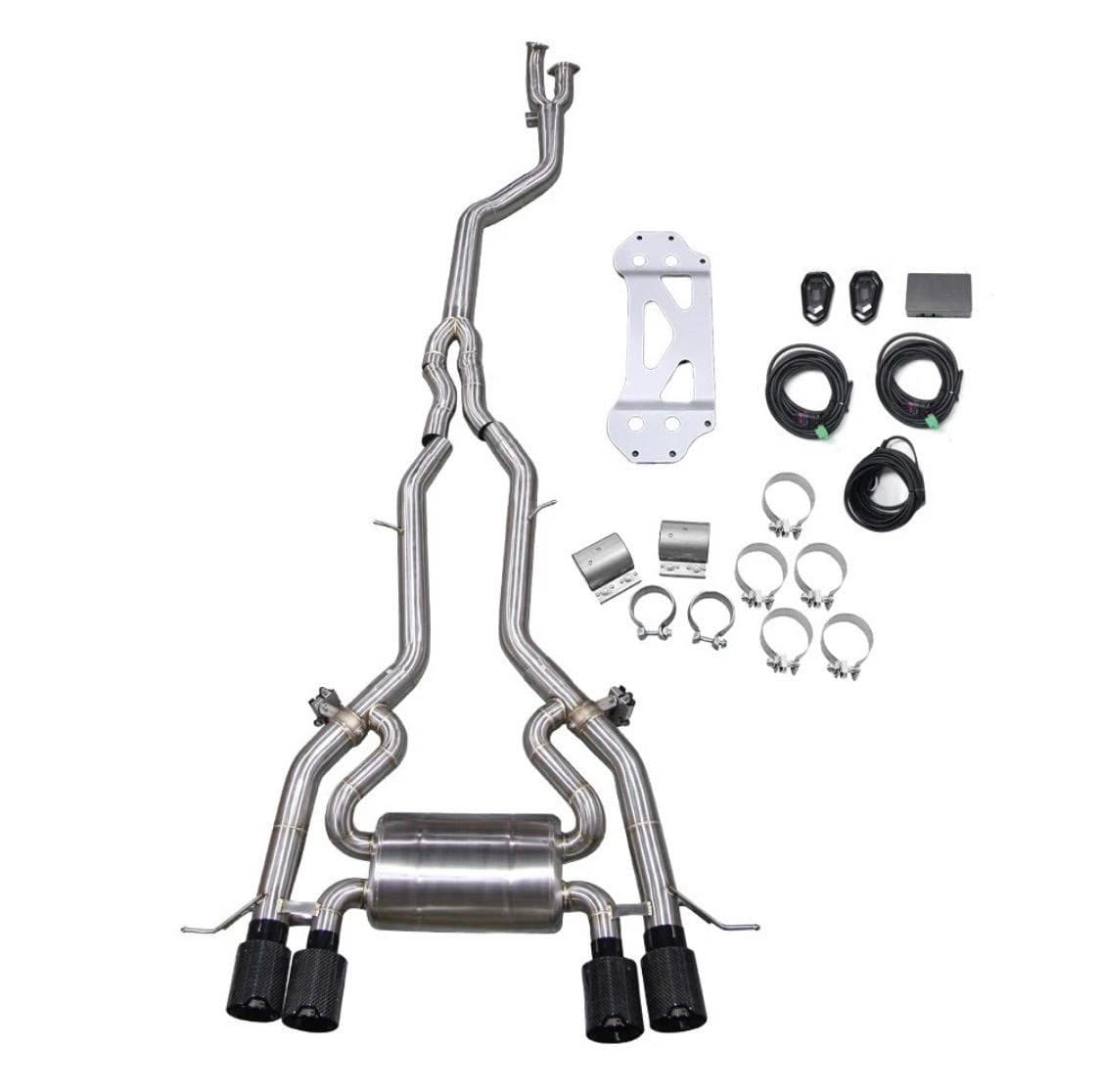
The G8X Z-pipe midpipe exhaust system is $1,800 and pairs that Z-pipe midpipe with a rear muffler and black tips. Choose the system if you want the look at the back to change as well as the sound.
The G8X single midpipe valved exhaust system is $1,600: a single midpipe, a rear muffler, carbon fiber tips and remote valve control. It is the option for owners who want a single midpipe's sound and a way to turn it down.
| Part | Fits (select at order) | What it includes, per the listing | Price |
|---|---|---|---|
| G8X midpipe | M2 (G87) or M3 / M4 (G80 / G82) | 4-inch midpipe, hardware and bracket; cut and bolt on | $620 |
| G8X Z-pipe midpipe | M2 (G87) or M3 / M4 (G80 / G82) | Z-pipe midpipe replacing the factory resonated section | $1,220 |
| G8X Z-pipe midpipe exhaust system | M2 (G87) or M3 / M4 (G80 / G82) | Z-pipe midpipe, rear muffler, black tips | $1,800 |
| G8X single midpipe valved exhaust system | M2 (G87) or M3 / M4 (G80 / G82) | Single midpipe, rear muffler, carbon fiber tips, remote valve control | $1,600 |
If you run an aftermarket diffuser, compare the new tips' diameter and spacing with its cutouts first; the carbon aero styles post covers that check. Everything here and the downpipes are on the Exhaust page, and the G87 listings filter to the M2.
What a valved exhaust is
A valved exhaust has flaps inside the rear section. Closed, they push the gas through the muffler's baffled path and the car is quieter. Open, the gas takes a more direct route and the car is louder. BMW fits exhaust flaps to its M cars and drives them from the car's modes; our G8X valved system uses the remote valve control in its listing.
Valves shut for a cold start or a long highway run, open for the full sound. To know how the remote works alongside your car's own exhaust button, ask us before ordering.
The same idea applies on older cars. The E9X M3 valved exhaust at $1,900 is built for the S65 V8 in the E90, E92 and E93 M3, with the valves open for the full V8 sound and closed for cruising, neighborhoods and cold starts.
Do you need a tune for a midpipe?
Usually not. A midpipe sits behind the catalytic converters and oxygen sensors, so in most cases the car runs on its factory software without complaint. Some owners tune anyway, to change how the flaps open or because a tune is already planned; that is a question for your tuner.
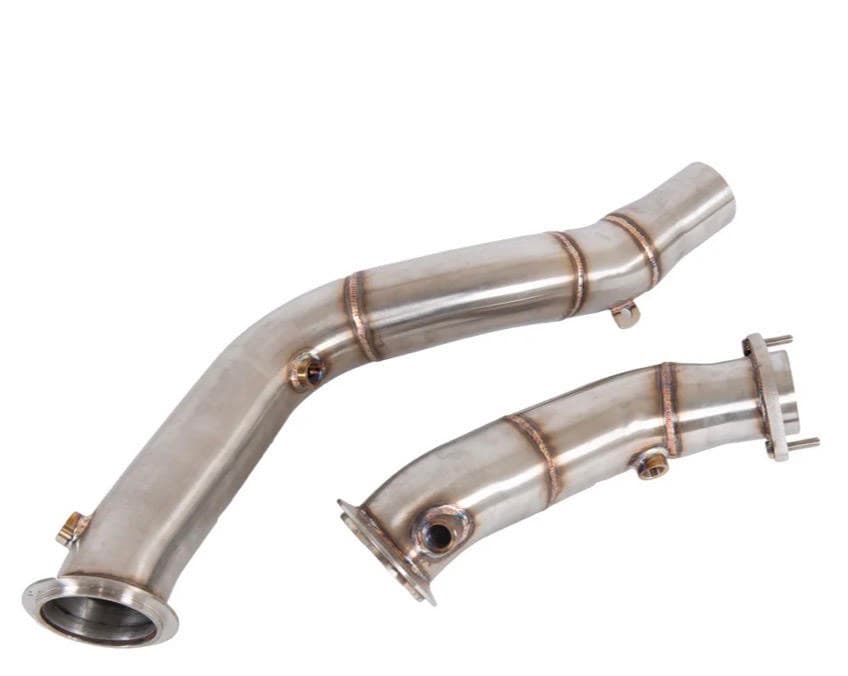
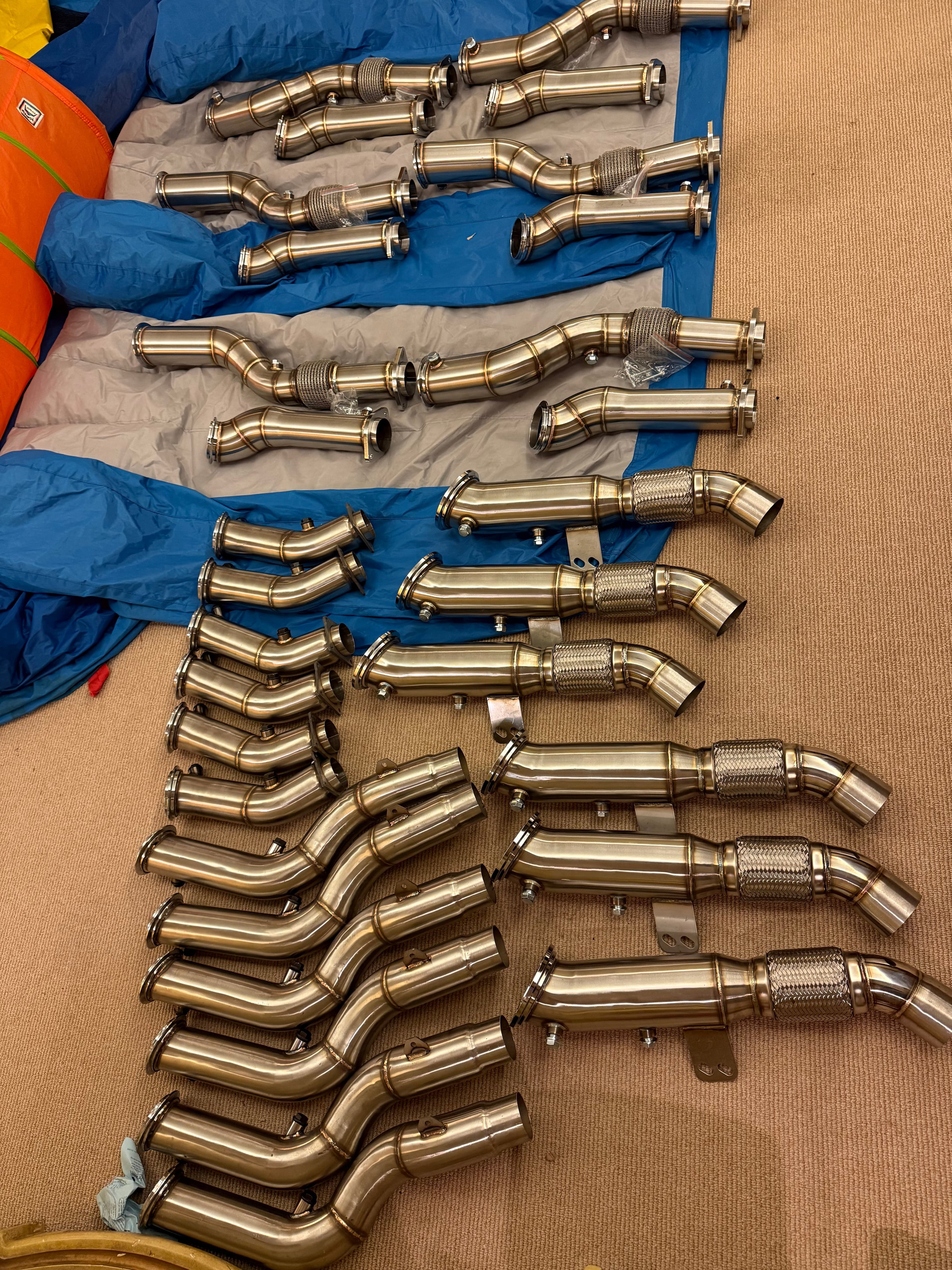
Downpipes are a different job. They replace the section that carries the catalytic converters, a catless downpipe removes the catalyst altogether, and the oxygen sensors read the difference, so plan on a tune to keep the car running properly and the warning lights off. On the S55 the S55 downpipes are stainless steel, sold as a pair with O2 sensor bungs at $259, and the S55/B58/S58 downpipes at $245 are selected by engine, with a G8X S58 option for the G80 and G82. The downpipe guide covers choosing one and the tune.
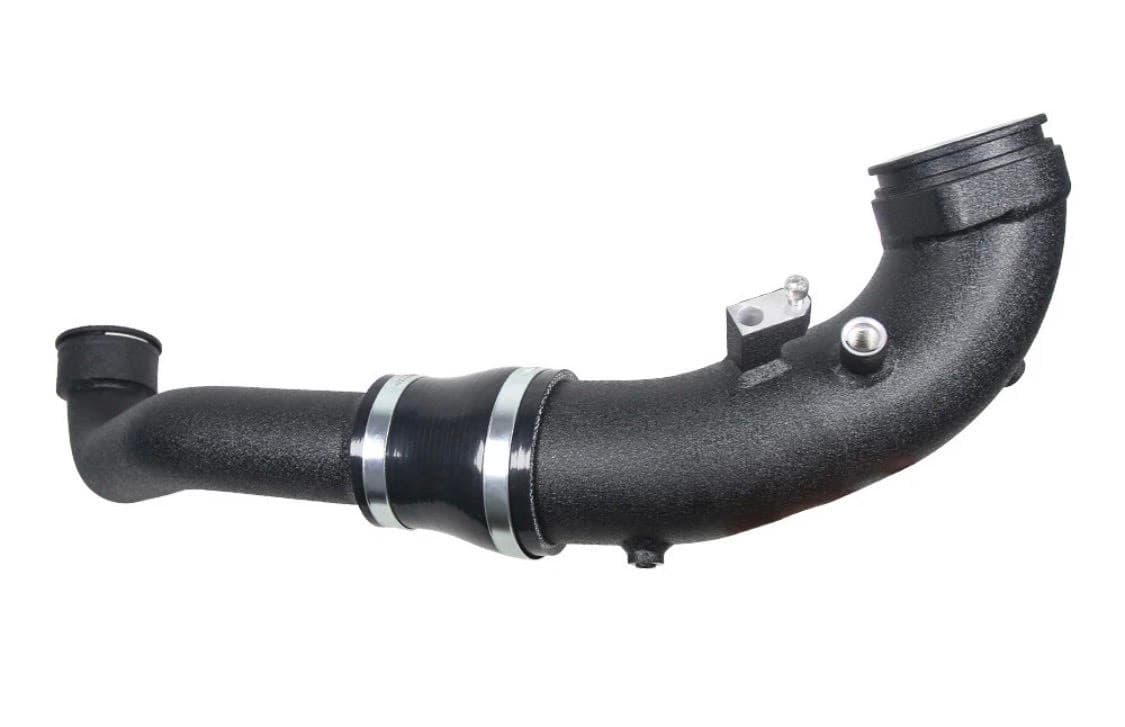
A tune raises boost, and on the S55 the first thing more boost finds is the plastic charge piping; the charge pipe post explains why that goes in first. The S55 bolt-on kit puts the equal length midpipe, catless downpipes, charge pipes with J-pipe, front mount intakes and charge cooler in one order for the F87 M2 or F8X M3/M4, at $2,500.
Installing a midpipe: what to expect
A midpipe is a reasonable home job with a lift or four solid axle stands, and a two-person job once the old section comes down, because it is long and awkward. Work on a cold car.
- Soak every clamp and hanger bolt in penetrating oil the day before; exhaust fasteners seize.
- Lift the car evenly onto stands. Never work under a car held by a jack alone.
- Remove underbody braces or heat shields covering the pipe, and photograph how they came off.
- Release the clamps at the downpipes and at the rear section, support the midpipe, then free it from its rubber hangers.
- On the G8X midpipe, cut the factory pipe at the marked spots as the instructions say. A clean, square cut makes the clamp seal properly.
- Fit the new pipe loosely, hang it, and line up the rear section and tips before tightening anything.
- Tighten the clamps from the front to the back, then check clearance to the driveshaft, the subframe and the heat shields all along the pipe.
Listen for ticking or puffing at the joints, and recheck the clamps after a drive or two; soot marks at a joint point to a leak.
Before you order, send us the car's year and model, which engine it has, and what else is already fitted to the exhaust, through the contact page. We will confirm the right part and chassis option for free.
FAQ
Is an equal length midpipe or a single midpipe better on the F80?
Neither is better outright. Equal length generally sounds smoother and more refined, single deeper and louder. Pick by the sound you want and how much highway driving you do.
Will a midpipe cause drone?
It can. A midpipe removes the resonators that cancel drone, so a low hum at steady cruising rpm becomes more likely, though not every car or driver notices it. A resonated option, a smoother layout or a valved rear section you can close all help.
Does a G80 midpipe fit a G87 M2?
No. Every G8X listing is split into M2 (G87) and M3 / M4 (G80 / G82) options because the parts differ. Select your chassis when you order.
Do I need a tune for an S58 Z-pipe?
Usually not on its own, because the midpipe sits behind the catalysts and oxygen sensors. If you add catless downpipes you will need a tune, and many owners do both at once.
Will a midpipe throw a check engine light?
A midpipe on its own normally does not, since it sits downstream of the sensors that monitor the catalysts. Warning lights after exhaust work usually come from catless downpipes without a tune, or from a sensor connector left unplugged during the install.