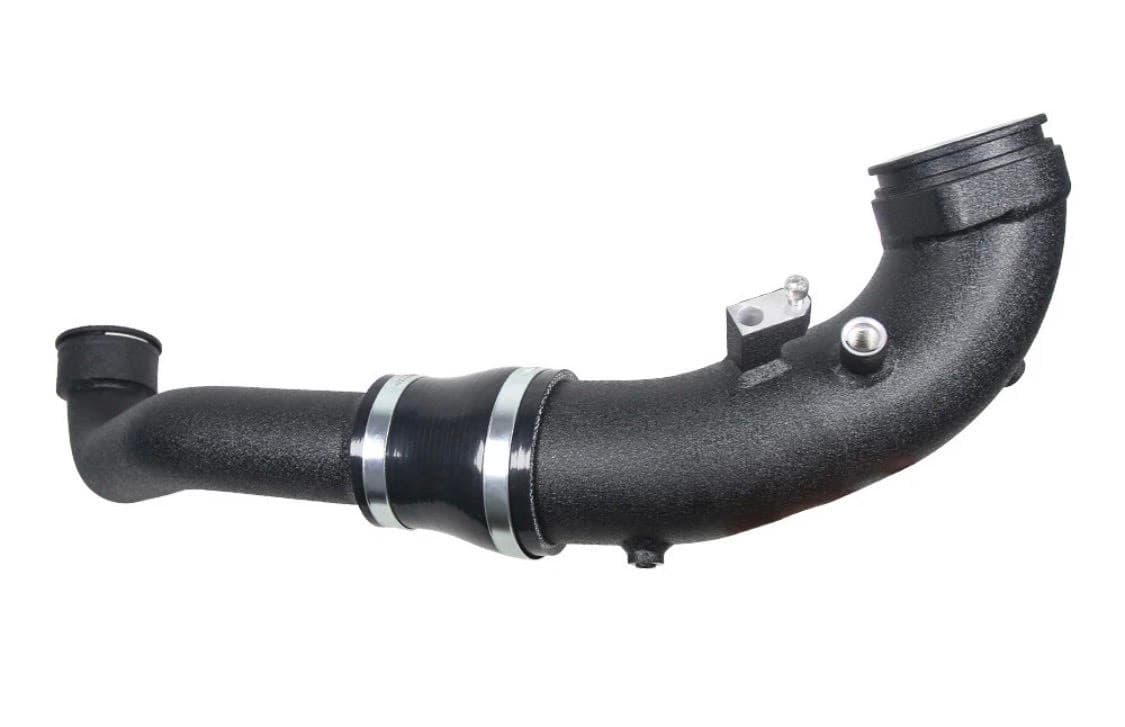
The plastic charge pipe BMW fitted to the B58 and the S55 is the part most likely to put a tuned car into limp mode with no warning, and it gives up on stock cars too, just less often. An aluminium replacement removes that failure point, and on anything running more than factory boost we recommend fitting it before the tune. Buying the right one means knowing which engine you have, and on the B58 that is a generation question, not a model-year question.
What a charge pipe is
A turbocharger compresses intake air, and compressed air is hot, so between the turbo and the cylinders sit pipework and a cooler. The charge pipe is the pipework. On the B58 the cooler is built into the intake manifold, so the pipe runs from the turbo outlet straight to the throttle body and carries the hottest air in the system. On the S55 the cooler is a separate air-to-water unit on top of the engine, with a charge pipe in from each turbo and one pipe out to the throttle body.
Why the factory plastic fails, and what it feels like
The factory pipes are moulded plastic, joined to the metal around them by flanges with O-ring seals, held by retaining clips or a couple of bolts rather than clamped silicone, and hung on plastic brackets.
Three things go wrong. The flange cracks, usually as a hairline you cannot see until the pipe is off the car. A moulded seam splits. Or the joint lets go and the pipe blows off under boost, the failure owners talk about because it sounds expensive.
Heat cycling does most of the damage: the plastic expands and contracts against the metal it is fixed to and gets more brittle with age. A tune raises the pressure on every pull, so a pipe that would have lasted years on stock boost lets go much sooner.
| What you notice | What it usually is | Field check |
|---|---|---|
| Loud whoosh mid-pull, then no power | Pipe blown off or split open | Pop the hood; a loose pipe is obvious |
| Drivetrain malfunction warning, limp mode, still drives | Boost target not met, engine protecting itself | Read the codes for boost pressure or charge air faults |
| Faint hiss under load, power feels flat, no warning | Hairline crack or a tired seal | Flashlight on the flange; a boost leak test confirms it |
A blown-off pipe pushed back on at the roadside is a get-home fix, not a repair.
S55: charge pipes, J-pipe and charge cooler
The S55 in the F80 M3, F82 M4 and F87 M2 Competition and CS is twin-turbo. Compressed air leaves each turbo through its own charge pipe to the cooler, sheds heat to the water circuit, and leaves through the J-pipe, named for its shape, to the throttle body. All three are factory plastic and any of them can fail. The earlier F87 M2 has the N55 and different pipes.
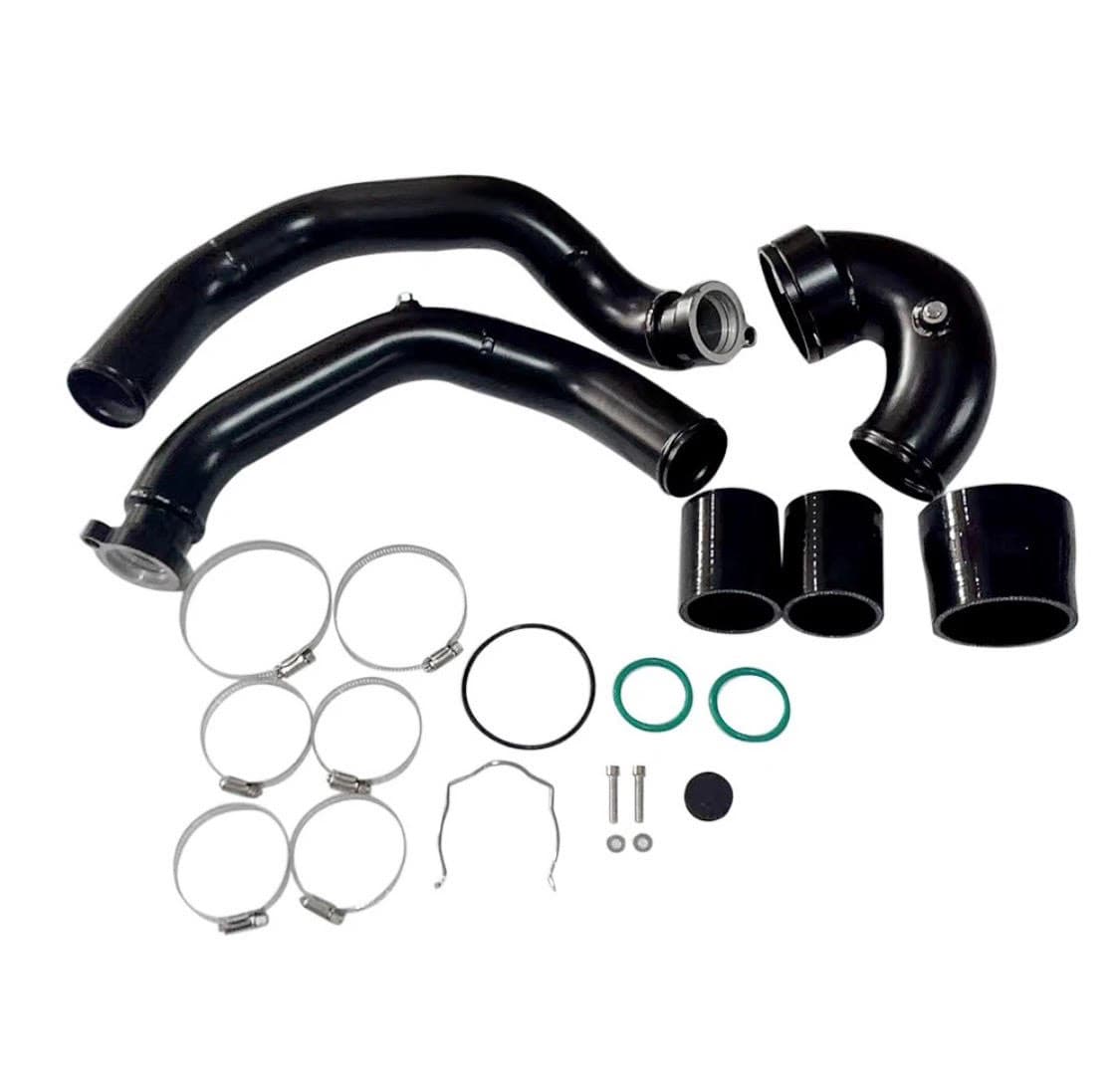
An S55 kit is therefore a set of three, both charge pipes and the J-pipe. Replace the hot-side pipes alone and the plastic J-pipe is still ageing at the throttle body. The F80/F82/F87 charge pipes and J-pipe kit covers all three, with silicone couplers, clamps, seals and hardware in the box.
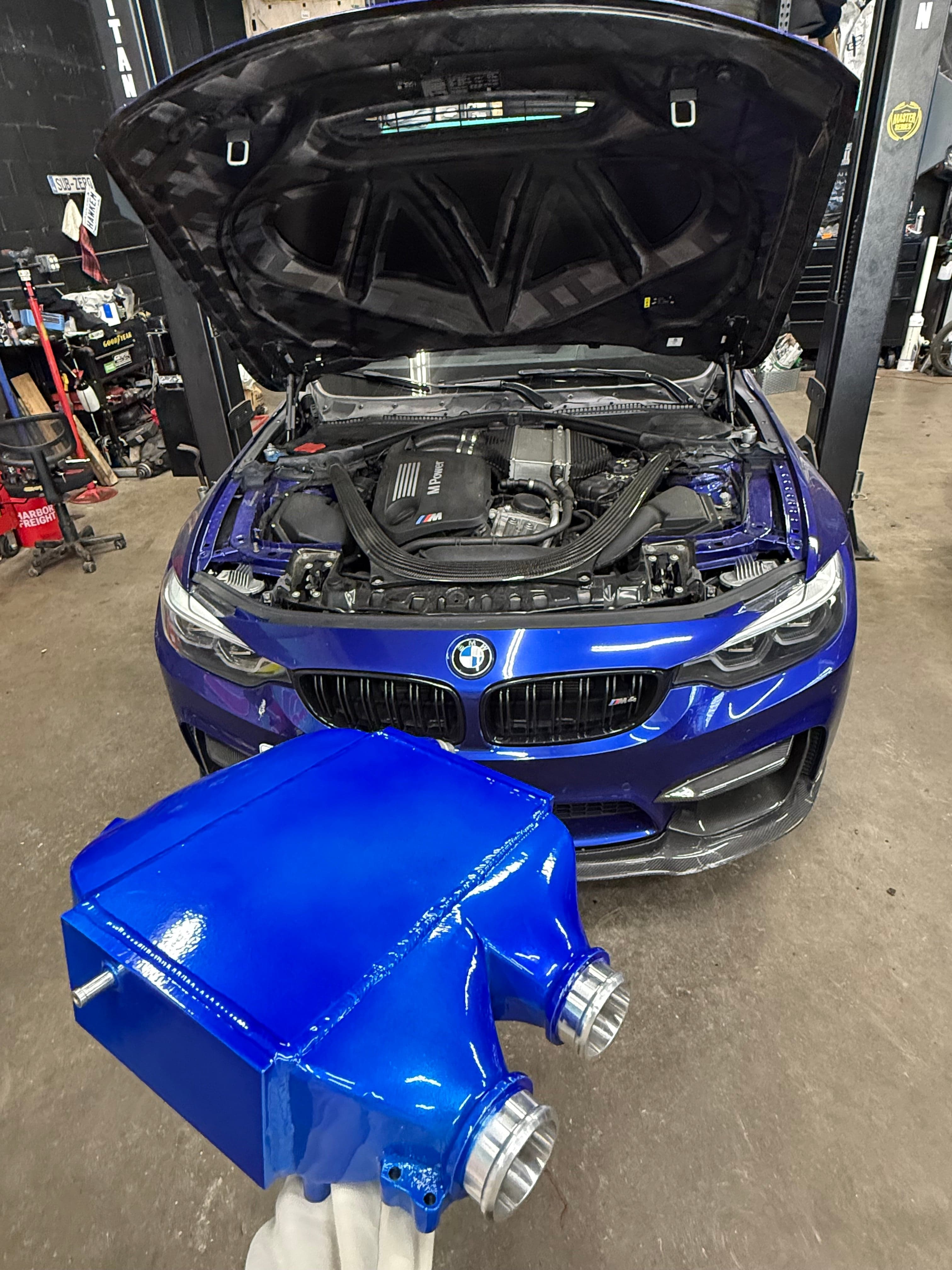
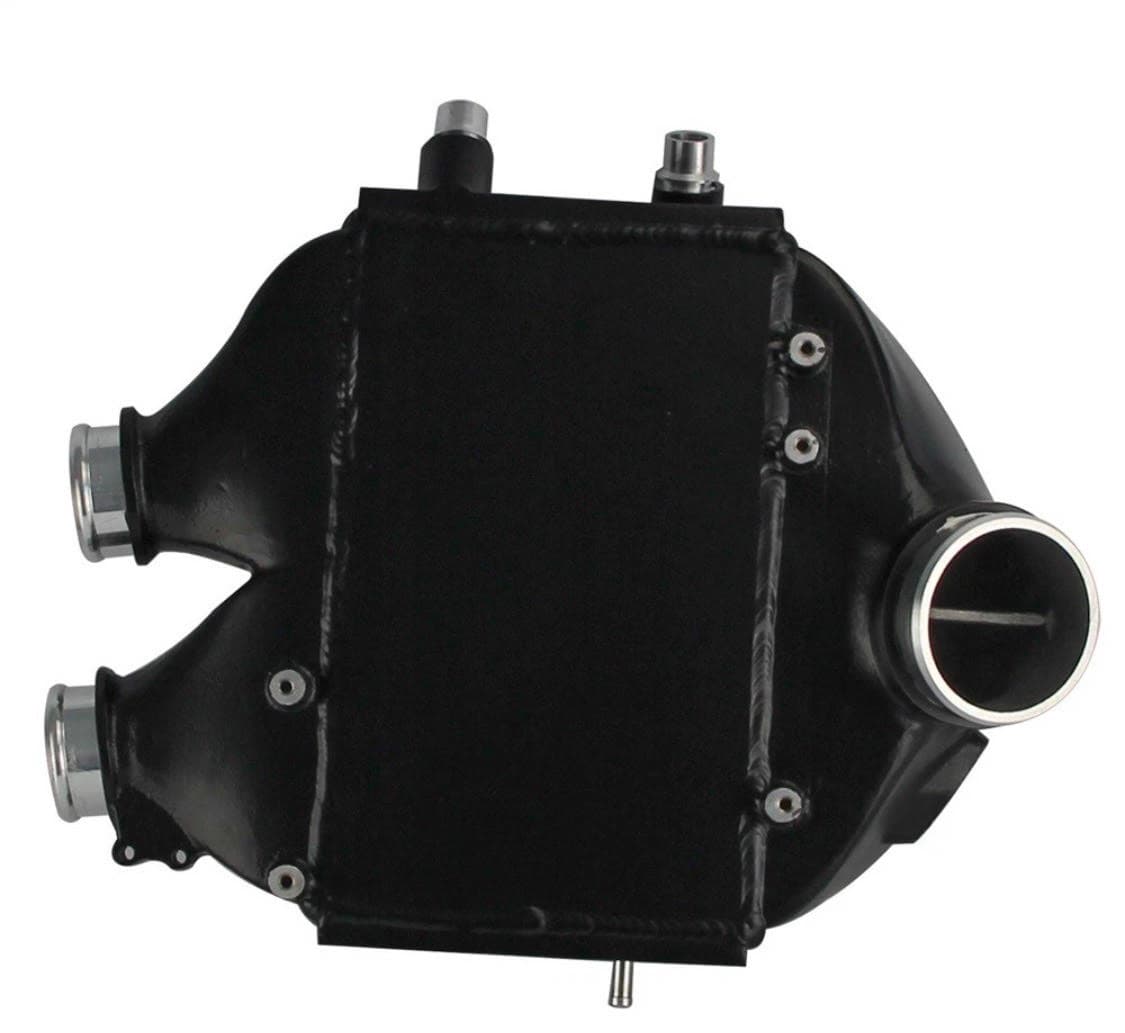
On a hot day with back-to-back pulls the factory core runs out of capacity: the water side cannot shed heat as fast as the air side delivers it, intake temperatures climb and the engine pulls timing. A larger core has more fin area and more coolant in it, so it takes more pulls before intake temperatures start climbing. Watch intake air temperature on an OBD app over three or four pulls: if it climbs each time and is slow to recover, the cooler is your limit, and if it holds steady the pipes are enough. The F80/F82/F87 charge cooler drops in for the factory unit, and the S55 charge cooler with charge pipes and J-pipe puts both in one box.
B58: Gen 1 or Gen 2, and how to tell
The B58 has two generations, and the charge pipe changed between them. Gen 1 (B58B30M0) is the engine in the 2016-era 340i and 440i. Gen 2, usually called the B58TU (technical update), arrived around the 2019 model year in the G05 X5 40i, G20 M340i, G29 Z4 M40i and Toyota Supra, then spread through the range. The two route the pipe differently, so neither fits the other engine.
The changeover did not land on one date, and some chassis were built with both engines, so model year alone can put you on the wrong side. Build date helps, and the pre-LCI vs LCI post shows where the build month sits on the door-jamb sticker. The LCI (Life Cycle Impulse, BMW's mid-cycle facelift) and the engine update did not have to arrive together, so an LCI car is not automatically Gen 2.
| What to check | Gen 1 | Gen 2 (B58TU) |
|---|---|---|
| Engine code | B58B30M0 | Another code: B58B30M1, B58B30O1 or B58B30C |
| Bolts at the throttle body flange | Three | Two |
| Typical cars | 340i, 440i, M240i, early X3 M40i, early 540i and 740i | M340i, Z4 M40i, Supra, X5 and X7 40i, 840i, later builds of the rest |
| Rough years | 2016 model year onward | Around the 2019 model year onward, model by model |
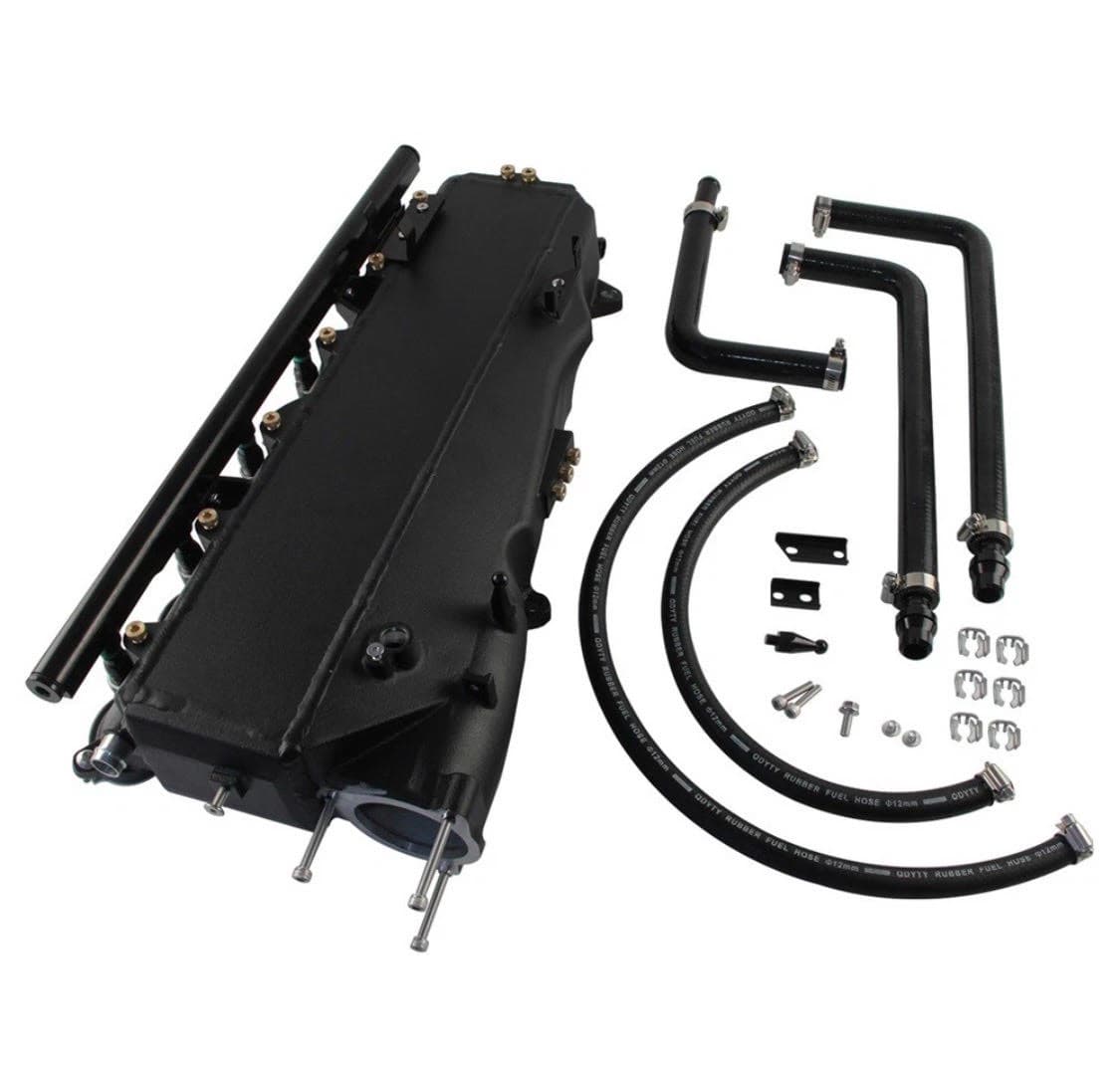
The B58 charge pipe is listed by generation for this reason, and so is the B58 CNC intake manifold it feeds. Confirm the generation once and both orders are covered.
Most of the catalogue sorts by chassis code and stops there: a front lip in any of the carbon aero styles listed for the F80 fits every F80. Charge-side parts do not, because two cars with the same badge and body can carry different B58s.
Intakes and downpipes on the same job
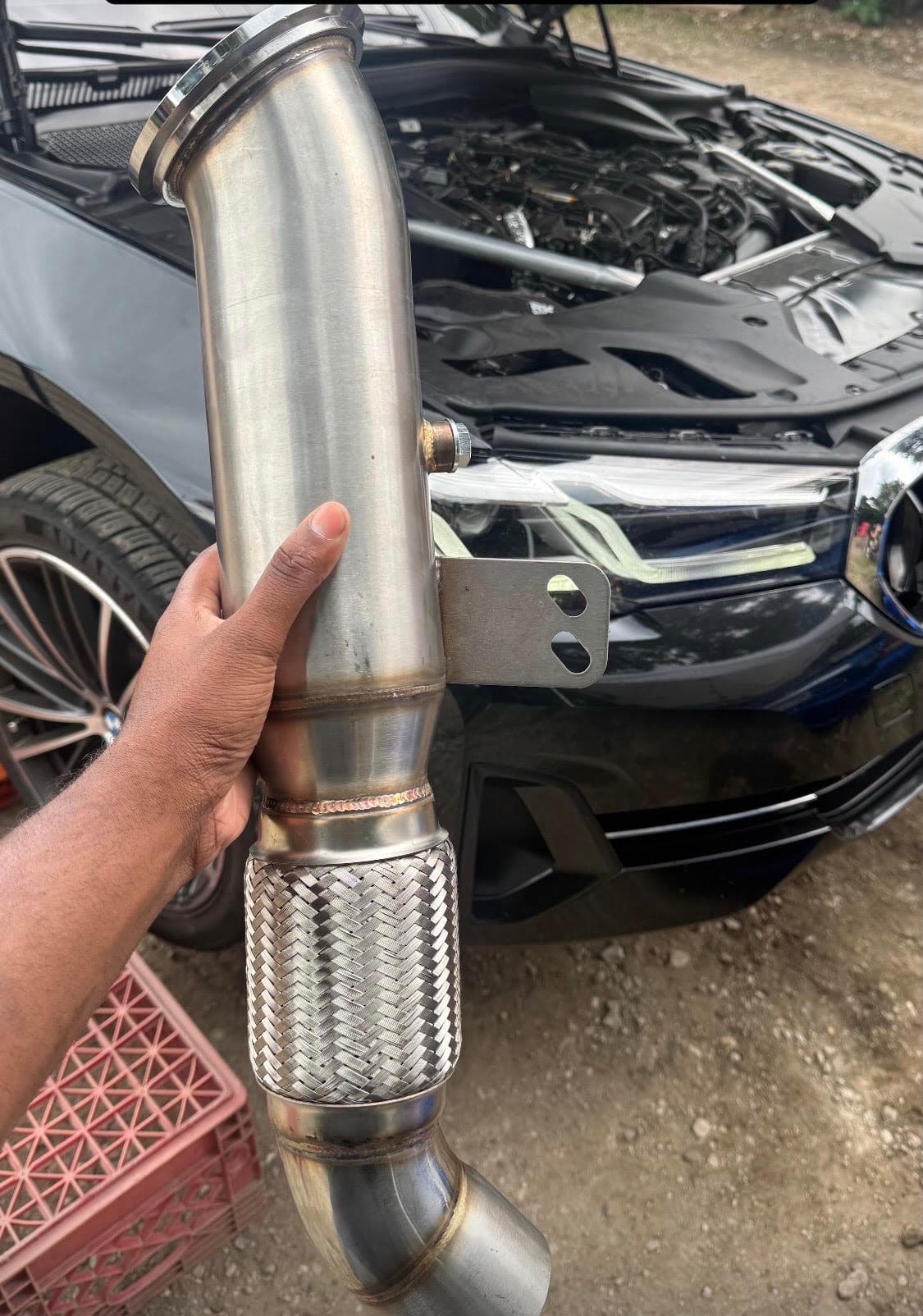
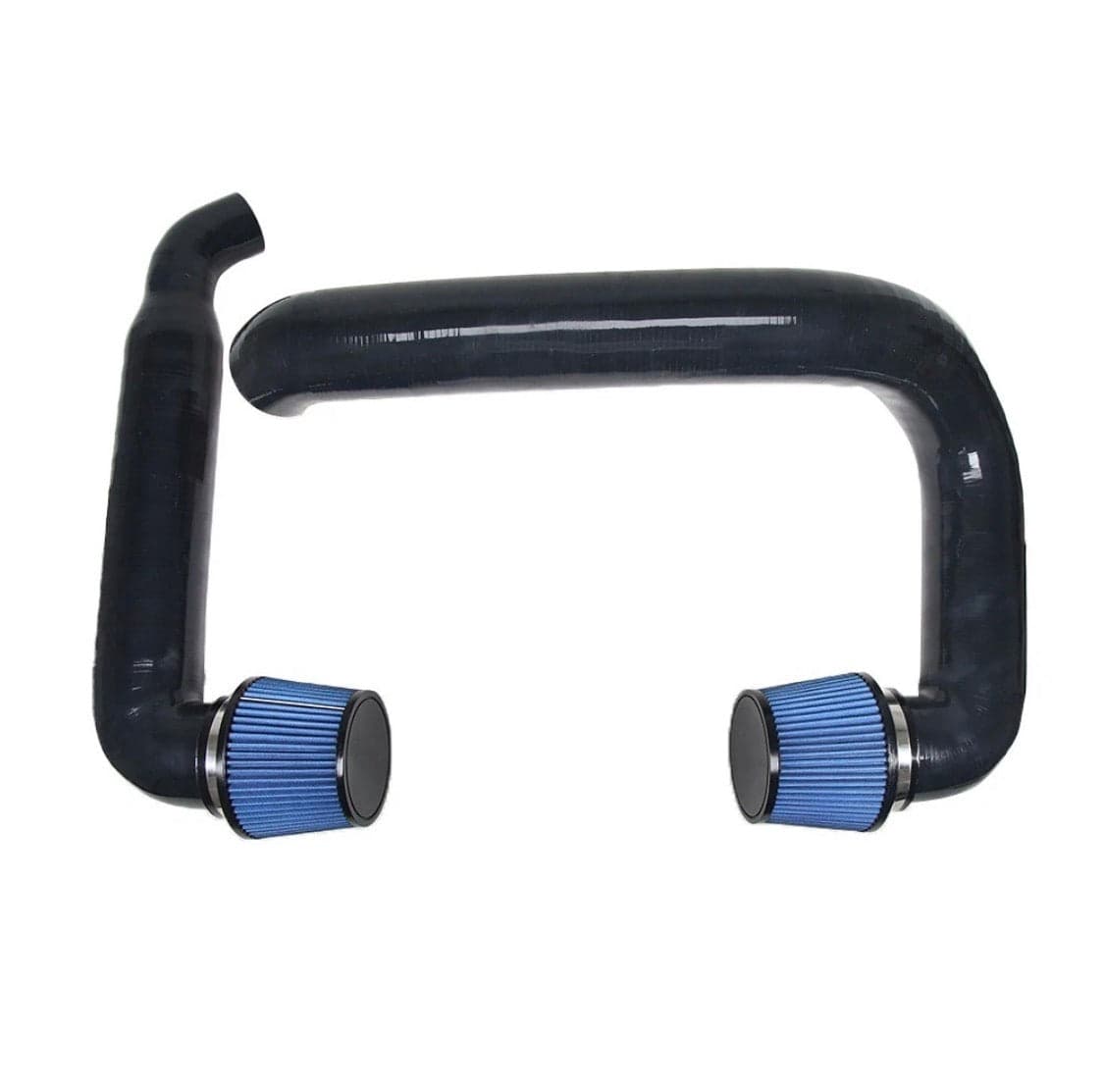
Once the charge pipe is aluminium, the parts owners usually do next sit on either side of the turbo. A front mount intake moves the filters forward, out of the hottest part of the bay, and the front mount intakes for the B58 and S55 do that on both engines.
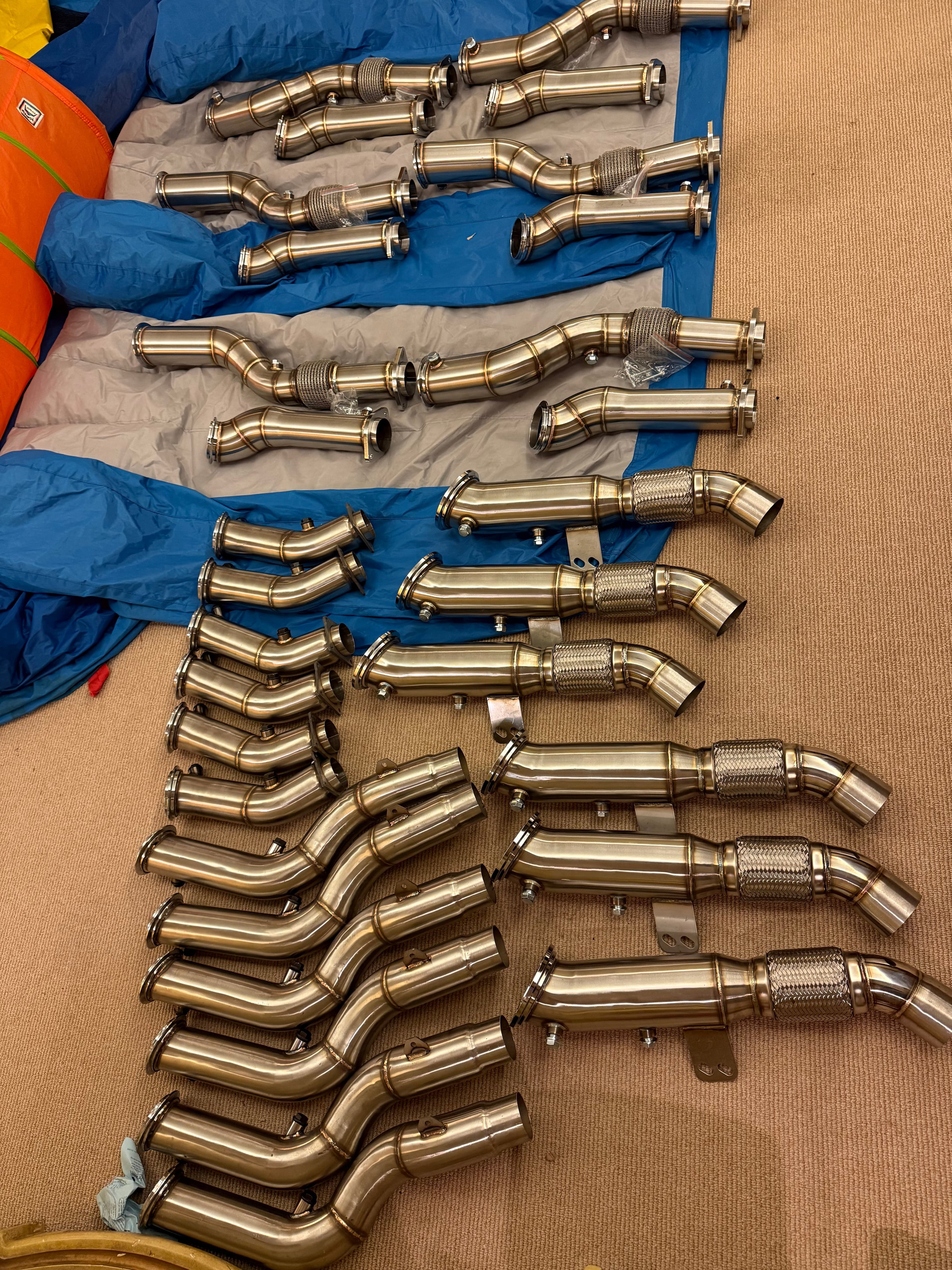
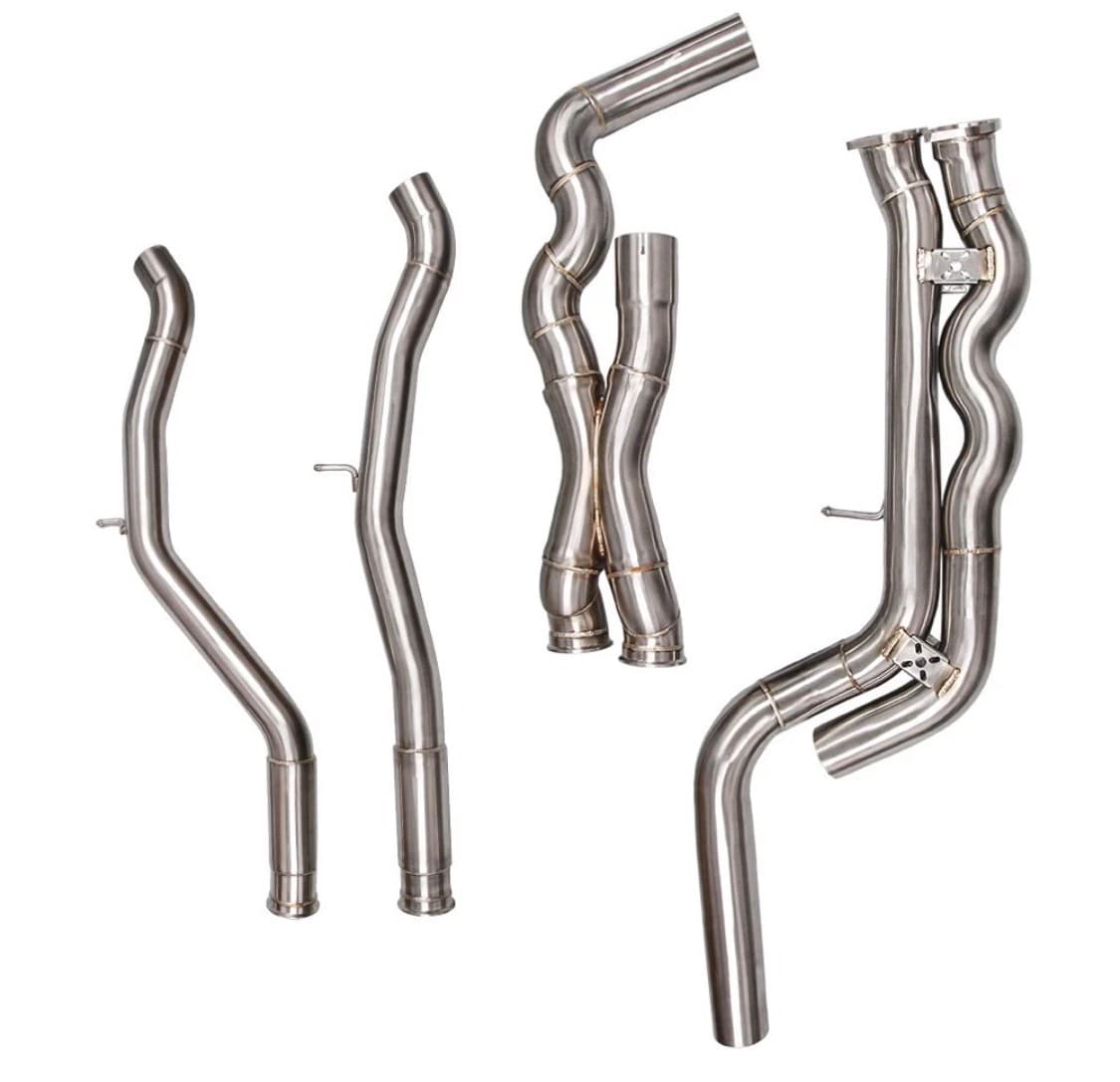
On the exhaust side, the factory downpipe carries the catalyst and a catless downpipe removes it. The B58 downpipe is again sold by generation, and the S55, B58 and S58 downpipes are selected by engine and car. On their own they add little. The gains come from a tune, and the first thing a raised boost target finds is a tired plastic charge pipe, so the pipe goes in first.
Installing a charge pipe
You need a metric socket set with extensions, Torx bits (most fasteners in the bay are Torx, including the flange bolts), a flat-blade screwdriver or trim tool for the retaining clips, and a flashlight and small mirror. No special tools.
On the B58, budget an afternoon if you have done your own brake pads; the awkward part is reaching the turbo end. On the S55 allow longer: the two hot-side pipes sit low by the turbos behind the intake ducting, and most of the time goes on reaching them.
- Start cold and photograph the factory routing first.
- On the B58, unbolt the throttle body flange (three bolts on Gen 1, two on Gen 2, O-ring behind it) and release the retaining clip at the turbo end. On the S55, unclip the J-pipe at the throttle body and the charge pipes at both ends. Each pipe should then rotate and pull free.
- Look at the flange on the old pipe; a hairline there is the leak you were chasing.
- Test-fit the new pipe loosely with couplers and clamps on.
- Fit the seals the kit supplies, and reuse an O-ring only if it is still soft and unmarked.
- Tighten the clamps evenly until the silicone just starts to compress, then check the pipe touches no belt, hose or loom.
Listen at idle for hiss around the joints. Warm the car up, do a couple of pulls under boost with the windows down, and treat any new whistle or whoosh as a joint that needs another look. Scan for codes, and check the clamps again after a few days; silicone couplers settle over their first heat cycles.
FAQ
Will an aluminium charge pipe add power?
On its own it adds little. It holds the boost the turbo already makes without cracking or blowing off, which matters most once a tune raises that boost. Fit it before the tune so the tuner is not chasing a leak mid-session.
Can I drive with a cracked or blown-off charge pipe?
Usually the car runs in limp mode with no boost, so you can get it home or to a shop. Do not carry on like that for days; an open pipe is pulling unfiltered air from the engine bay.
Which B58 do I have?
Run the VIN through a decoder that returns the engine code: B58B30M0 is Gen 1, and the technical-update engines carry B58B30M1, B58B30O1 or B58B30C. If that does not settle it, the engine cover lifts off with a firm pull, and the bolt count at the throttle body flange tells you: three is Gen 1, two is Gen 2.
Should I reuse the factory clamps and seals?
Follow the kit. Where it supplies a coupler and clamp, that replaces the factory joint. Where it reuses the factory retaining clip or the throttle body bolts, fit a fresh O-ring if the old one has gone flat, nicked or hard. On the S55 the factory J-pipe locking strip is single-use, so use the clip in the box.